Author: admin

  • Use Books to Support Communication

    Use Books to Support Communication

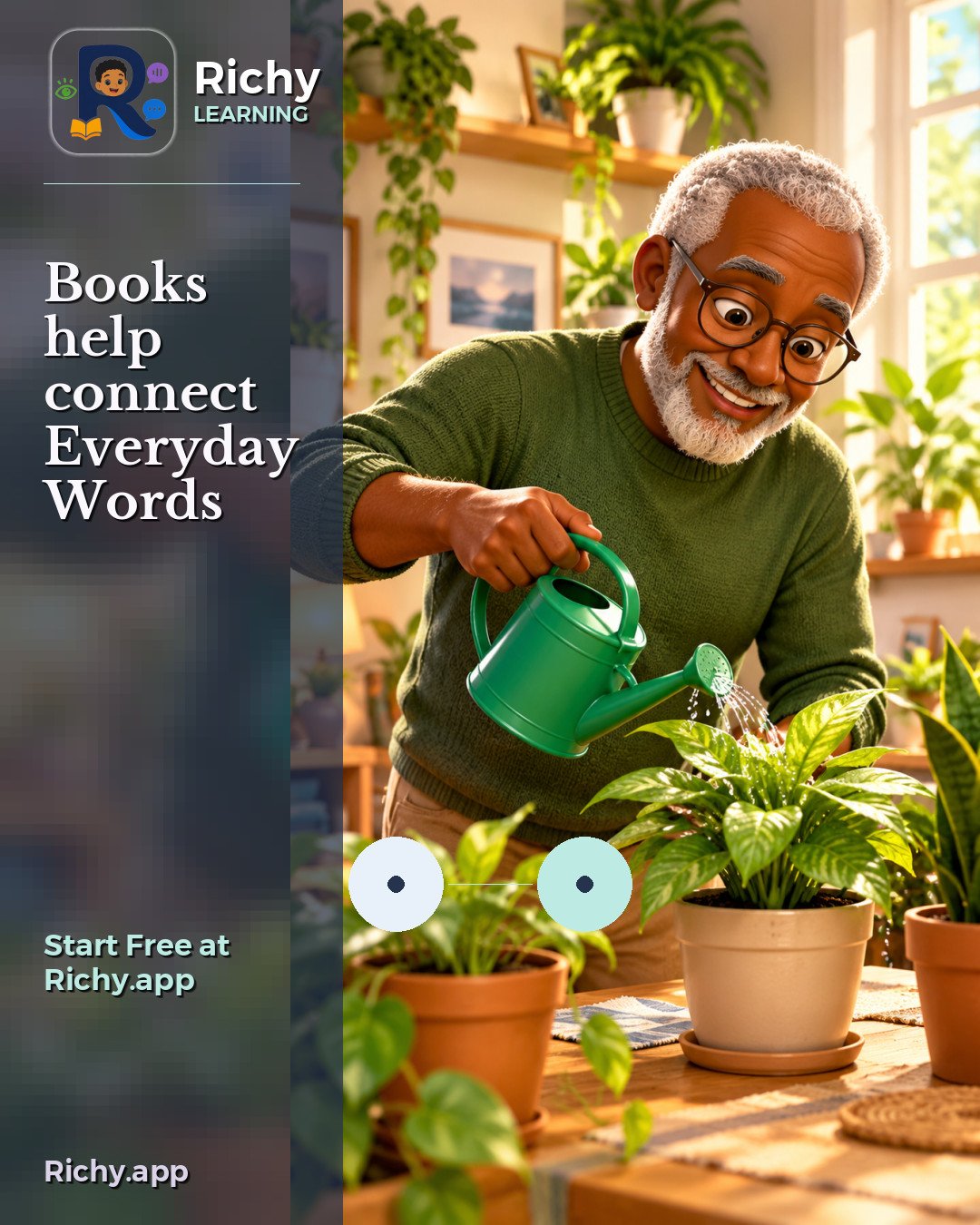
    Books Help Connect Everyday Words

    Even though the man is watering plants, books on the shelves nearby can be great tools to practise Everyday Words at a comfortable pace. For example, pointing to a familiar book title or picture can help connect words to objects and ideas, building communication step by step. Practising with books is a respectful, age-appropriate way to encourage gradual learning without pressure. Try choosing one book and talking about its cover or title today. Richy Learning supports these efforts with structured, personalised practice. Start free at Richy.app, or find Richy on the App Store for iPhone and iPad.
  • Use Books to Practice Communication

    Use Books to Practice Communication

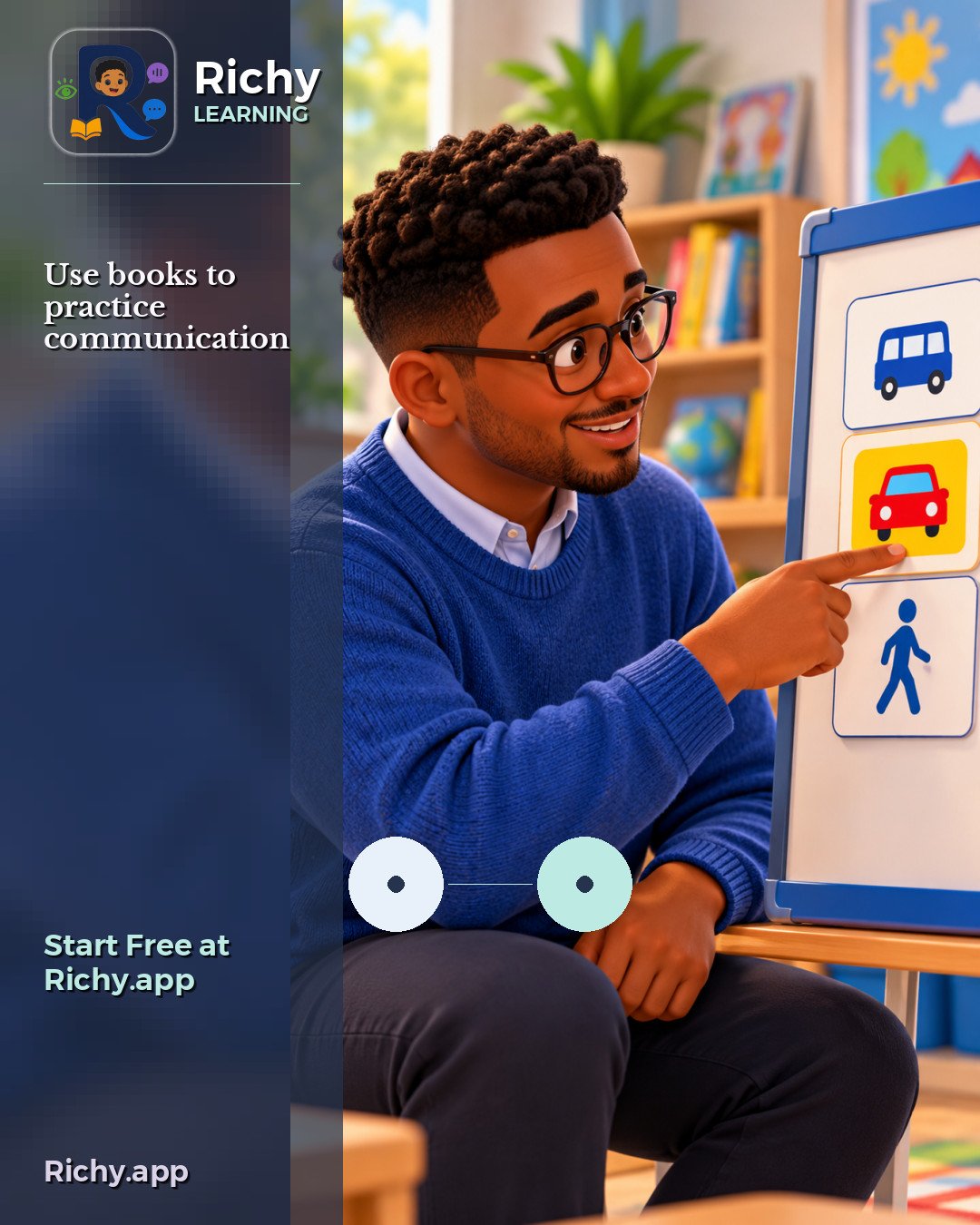
    Use Books to Practice Communication

    Using books or illustrated boards, like traffic signs, can help adults practice communication skills at their own pace. For example, pointing to signs and naming them supports understanding and expression without pressure. This approach respects individual timing and encourages learning through familiar objects. Try this simple step: choose a book or board with clear pictures and take turns pointing and naming. Richy Learning offers structured practice for Everyday Words and Objects if you want to explore more. Start free at Richy.app, or find Richy on the App Store for iPhone and iPad.
  • Describe Feelings Using Emotion Cards

    Describe Feelings Using Emotion Cards

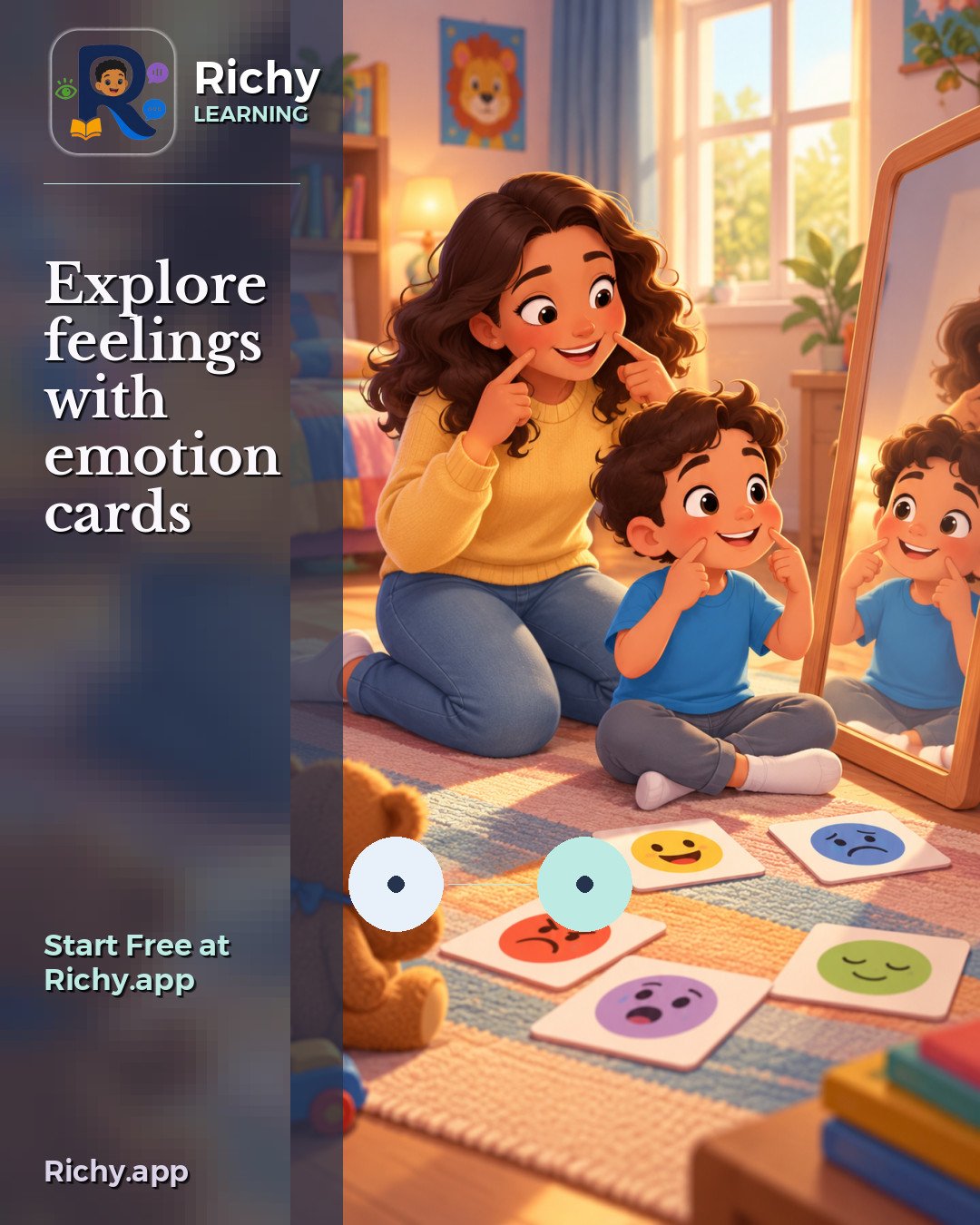
    Explore Feelings With Emotion Cards

    When children explore feelings, they learn to recognize and name emotions, helping build emotional awareness and communication skills. Using emotion cards alongside a mirror, like in this scene, encourages a child to connect facial expressions with words describing feelings. This gentle practice supports understanding emotions in everyday life. Try holding up an emotion card and asking your child how they feel today, offering time to respond in their own way. Richy Learning offers simple, structured activities like this to support feeling words and communication. Start free at Richy.app, or find Richy on the App Store for iPhone and iPad.
  • Prepare for Transitions with Backpacks

    Prepare for Transitions with Backpacks

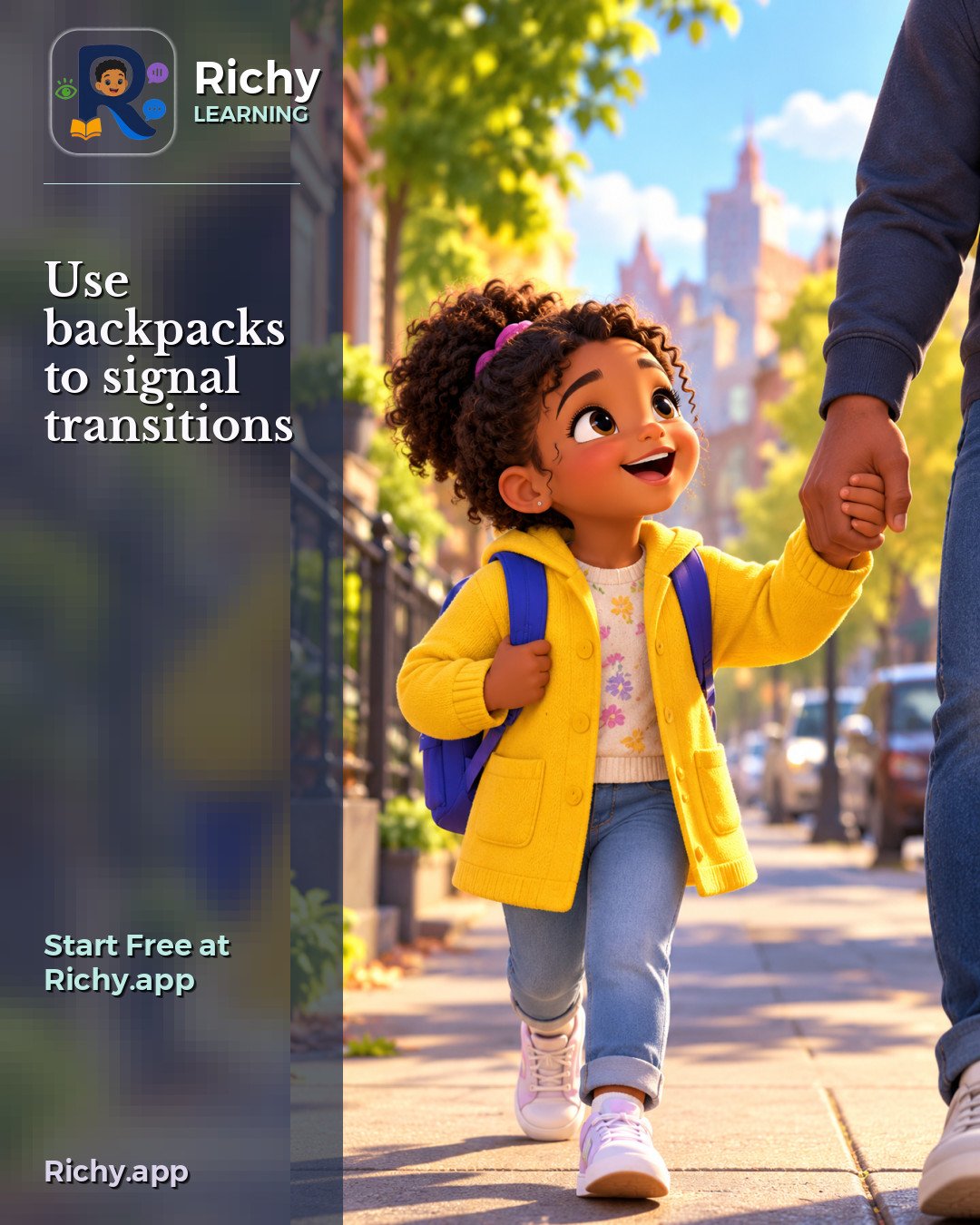
    Use Backpacks to Signal Transitions

    Transitions can be easier for children when routines are clear and predictable. For example, putting on a backpack can be a simple First–Then cue: first, pack your bag; then, we walk outside. This helps children understand what comes next and reduces anxiety during change. Try using this clear signal in your daily routine to support smooth transitions. Richy Learning offers structured practice for Everyday Objects like backpacks to build useful communication skills. Start free at Richy.app, or find Richy on the App Store for iPhone and iPad.
  • Respectful Help Through Reading Together

    Respectful Help Through Reading Together

    Practice Asking for Help Respectfully

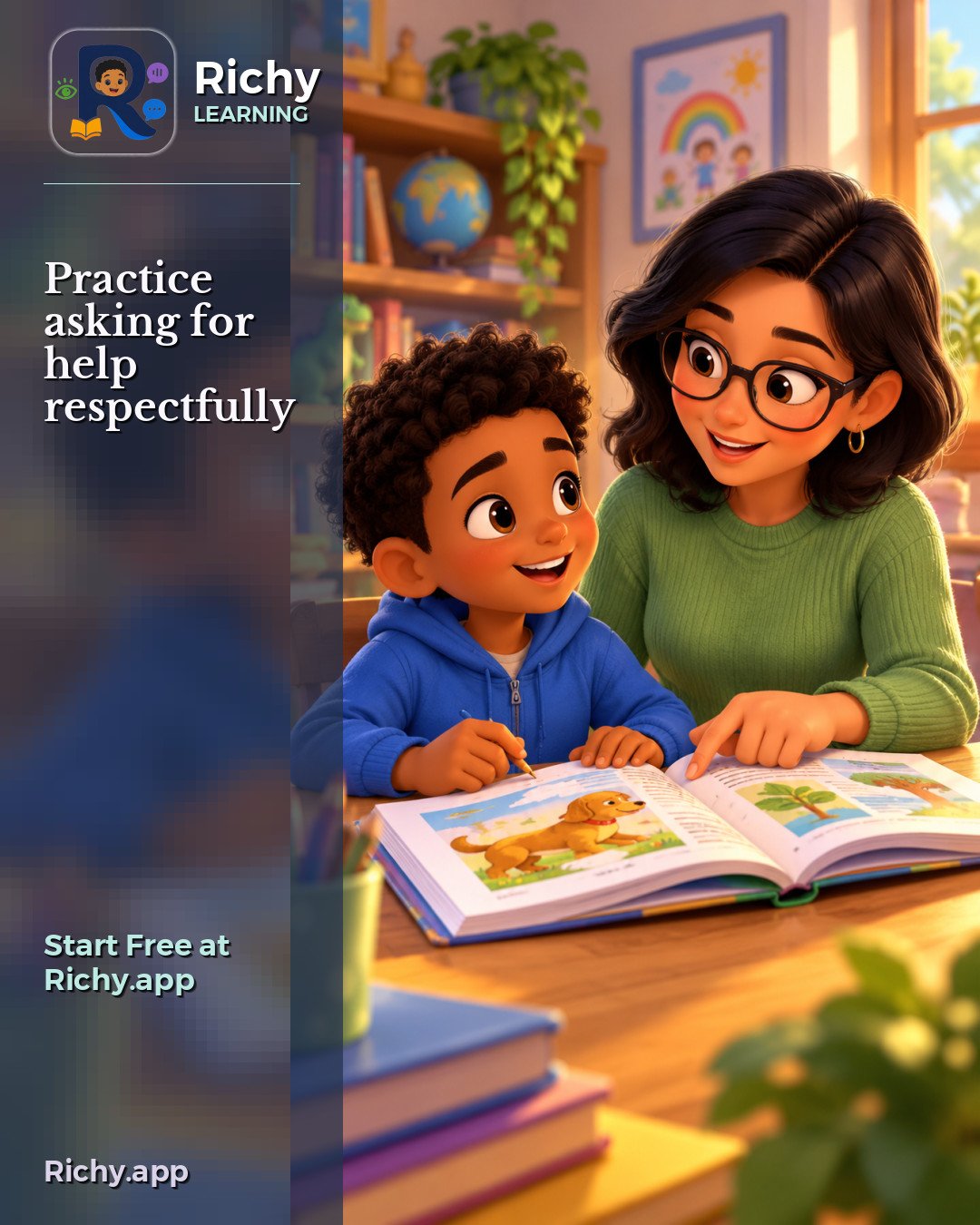
    Asking for help can be a meaningful skill to practise, especially in learning situations like reading together. In this scene, a woman gently supports a child exploring a book, encouraging respectful requests for assistance. Using Richy Learning, learners can practise asking for help in everyday activities with structured, adaptive steps that build confidence and communication skills. For example, you might say, “Can you help me read this word?” to model respectful asking. Start free at Richy.app, or find Richy on the App Store for iPhone and iPad.
  • Fold Clothes with Clear Instructions

    Fold Clothes with Clear Instructions

    Fold Clothes One Step at a Time

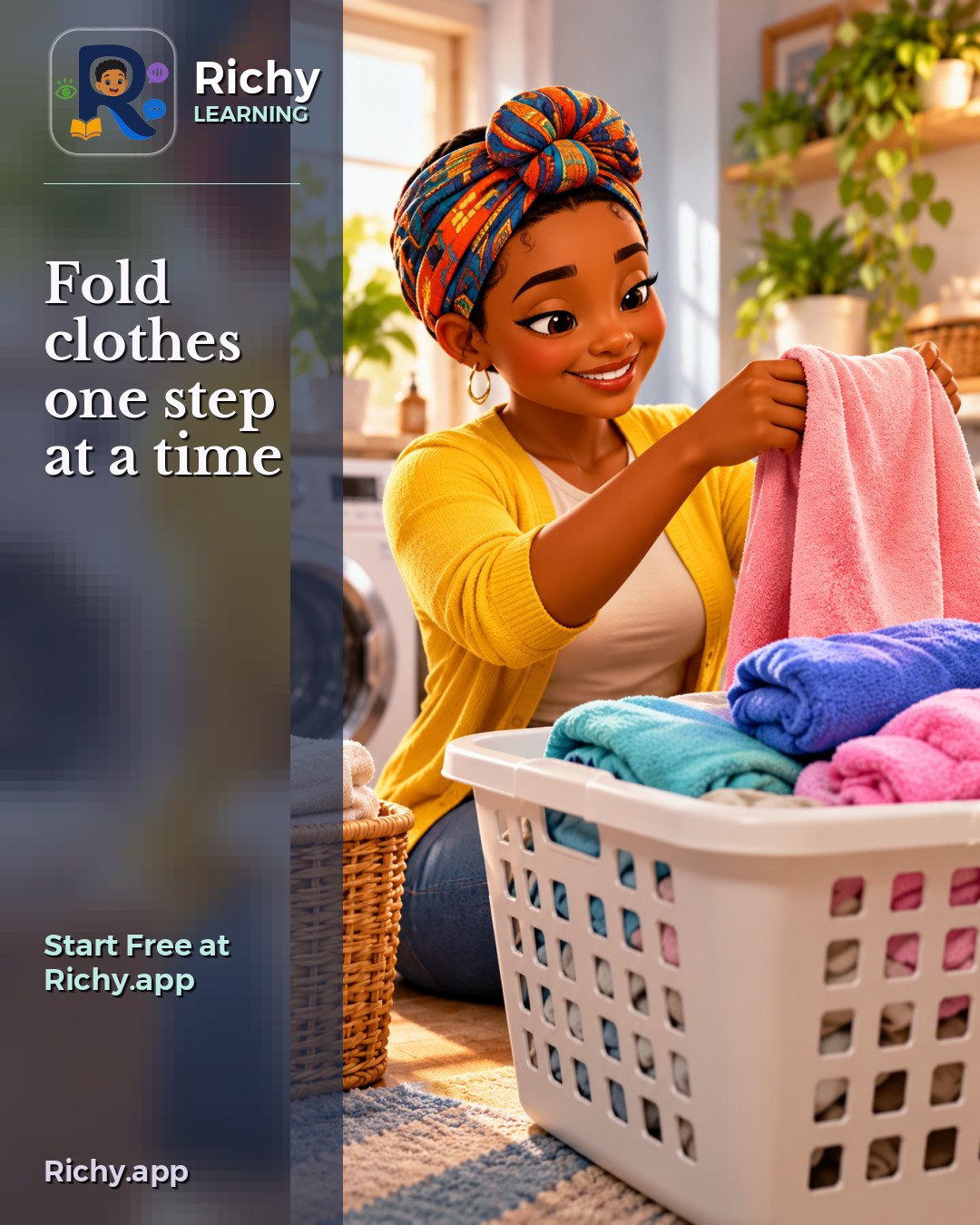
    When helping someone fold clothes, give one clear instruction like “Fold this shirt” and allow time for them to respond. This simple step helps reduce confusion and supports effective communication. Practicing one-step instructions with everyday tasks like laundry builds confidence and understanding. Try this respectful approach with clothes or other objects at home. Richy Learning offers structured ways to practice these skills gently and adaptively. Start free at Richy.app, or find Richy on the App Store for iPhone and iPad.
  • Explore WHERE the Bus Waits

    Explore WHERE the Bus Waits

    WHERE Does the Bus Wait?

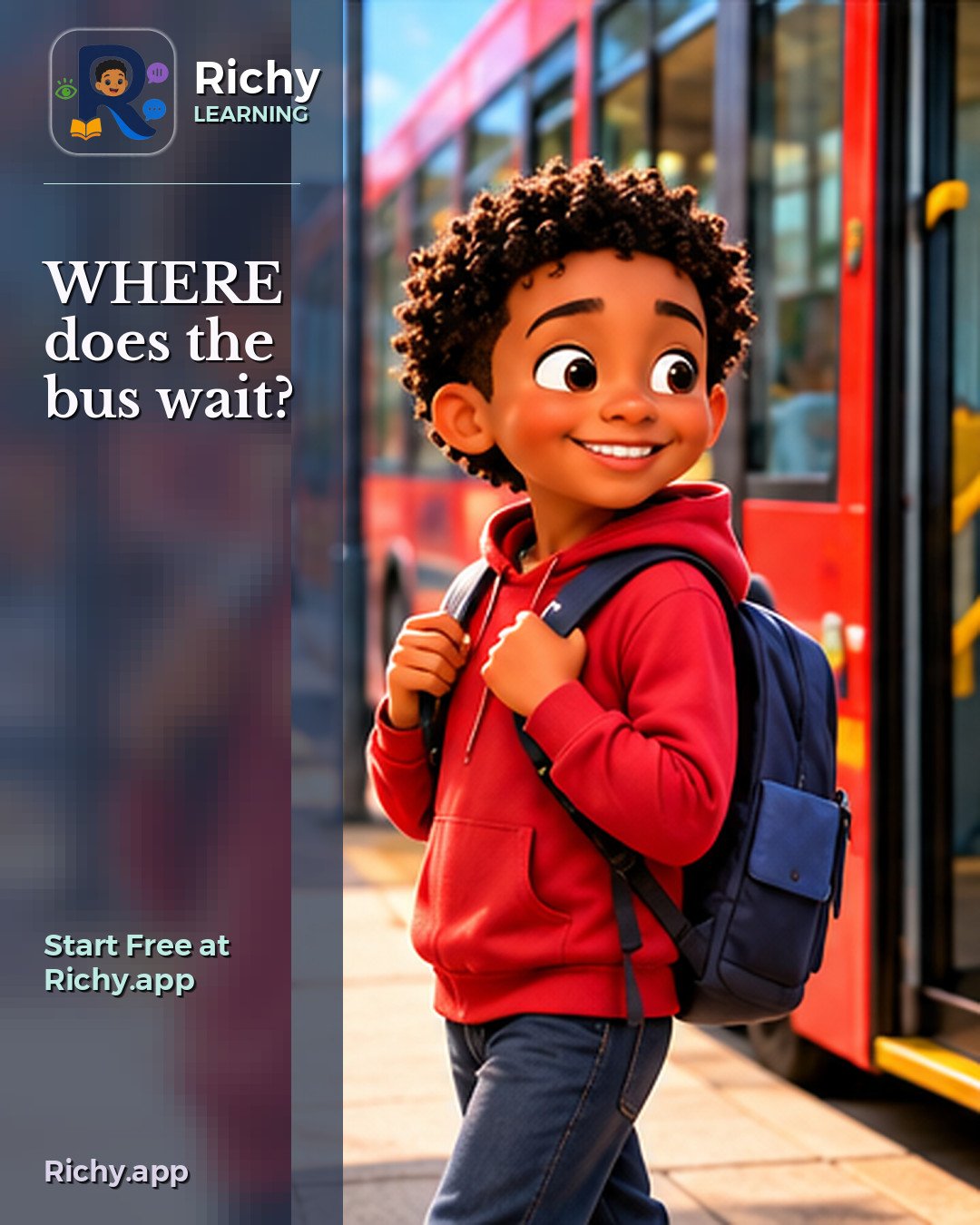
    When children ask WHERE questions, like "Where does the bus wait?", it helps them understand daily routines and locations. For example, pointing out the bus stop and the red bus where this boy waits builds meaningful connections with Everyday Objects and places. Practicing with clear questions about familiar settings supports communication and confidence. Try asking WHERE questions during daily routines to encourage observation and response. Richy Learning offers tools to practice these skills at your own pace. Start free at Richy.app, or find Richy on the App Store for iPhone and iPad.
  • Explore WHAT Questions with Water

    Explore WHAT Questions with Water

    WHAT is the Teen Writing About?

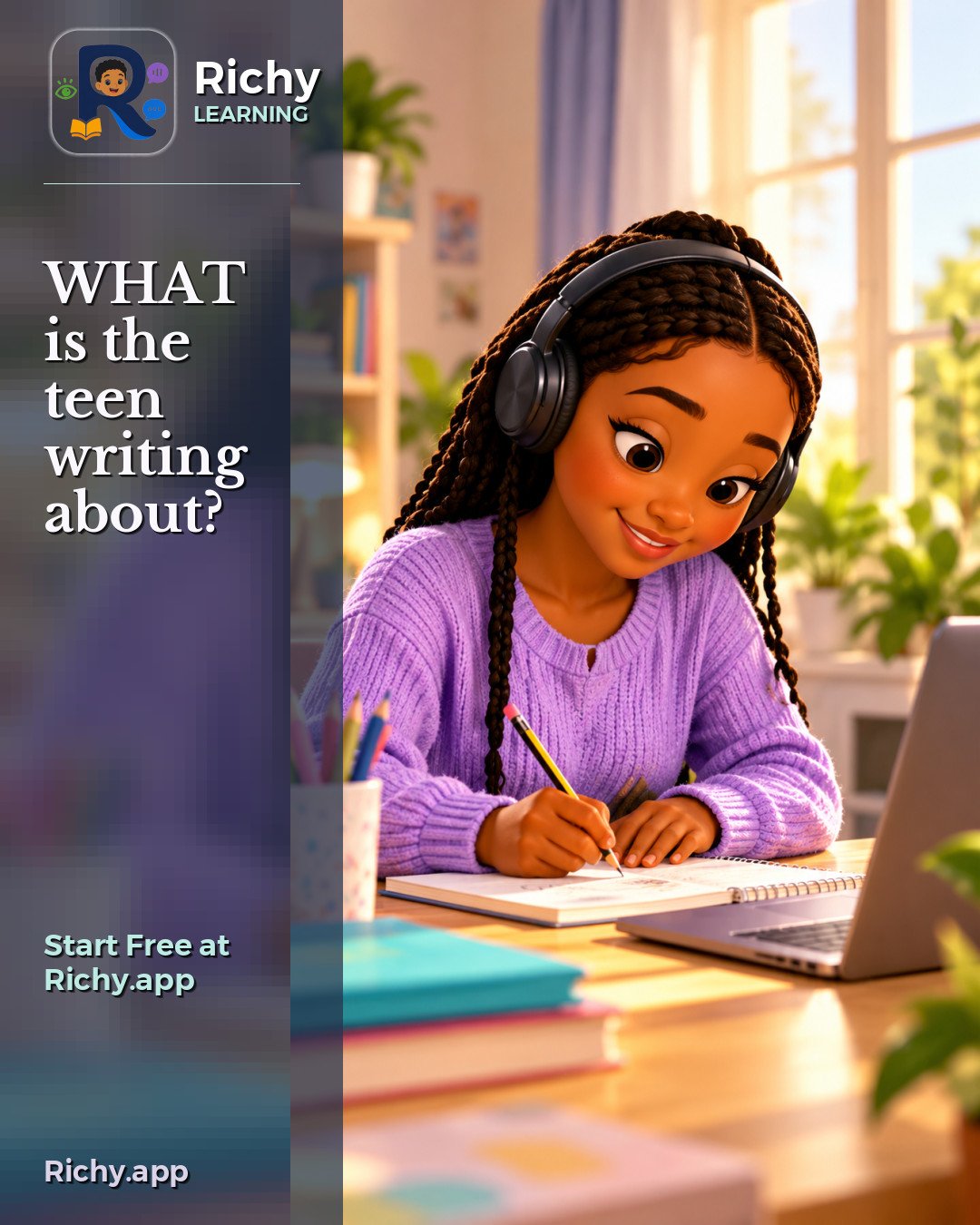
    Noticing what is happening helps build communication skills. Here, a teen is writing notes, perhaps after observing how water affects plants nearby. Asking simple WHAT questions like “What is the teen writing?” or “What is water used for?” encourages learners to describe actions and objects around them. Practise this by watching a scene together and gently asking WHAT questions to support clear understanding. Richy Learning helps guide these activities with structured practice. Start free at Richy.app, or find Richy on the App Store for iPhone and iPad.
  • Identify WHO Helps at Home

    Identify WHO Helps at Home

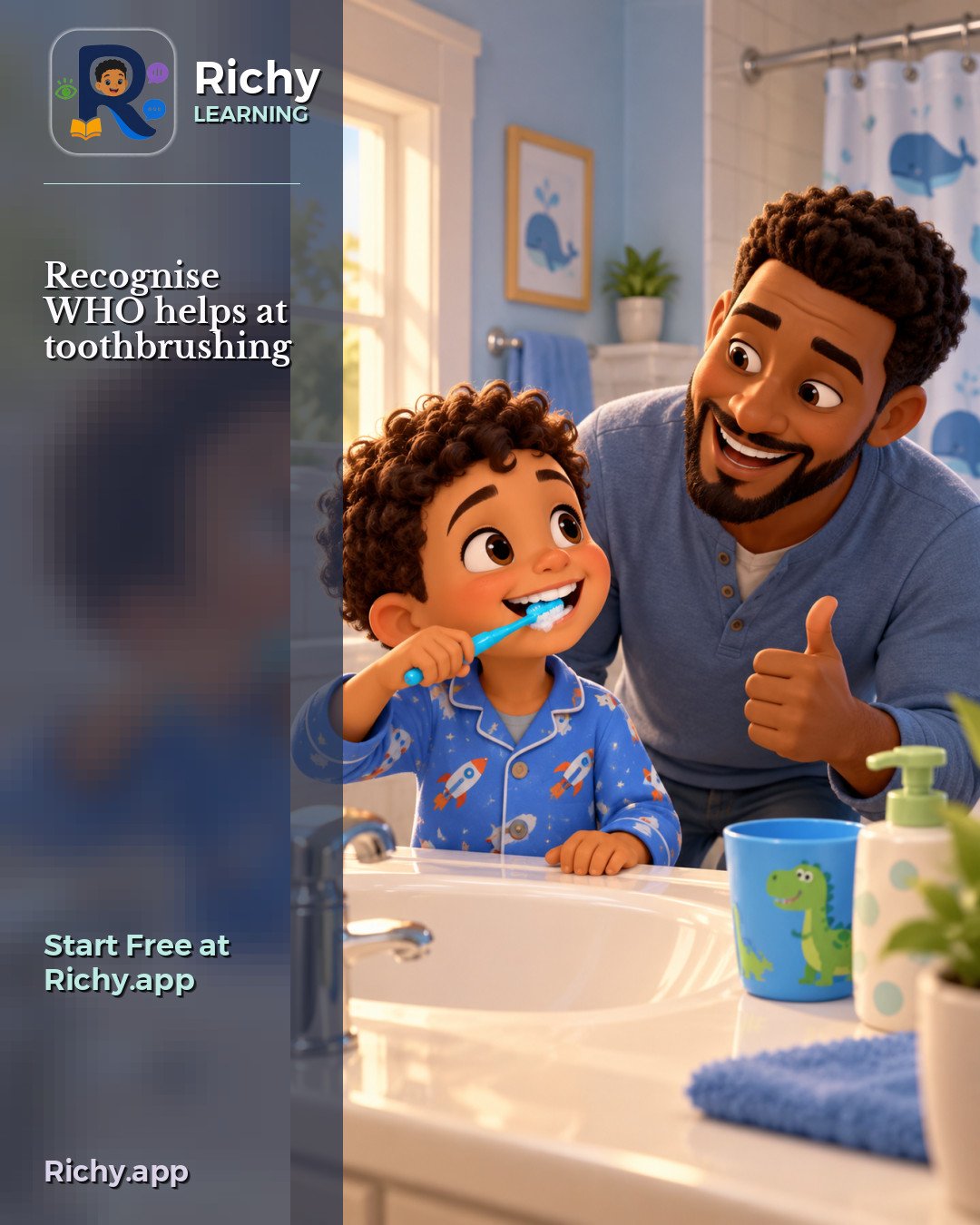
    Recognise WHO Helps at Toothbrushing

    When a child sees who is helping during daily routines, it builds connection and understanding. For example, asking "Who is helping you brush your teeth?" encourages the child to notice and respond to the supportive person. This simple WHO question can strengthen communication and awareness in everyday moments. Try asking WHO questions during your daily caregiving tasks to support recognition skills gently. Richy Learning offers structured practice for WHO questions and more at Richy.app. Start free at Richy.app, or find Richy on the App Store for iPhone and iPad.

  • Explore Backpack Functions Together

    Explore Backpack Functions Together

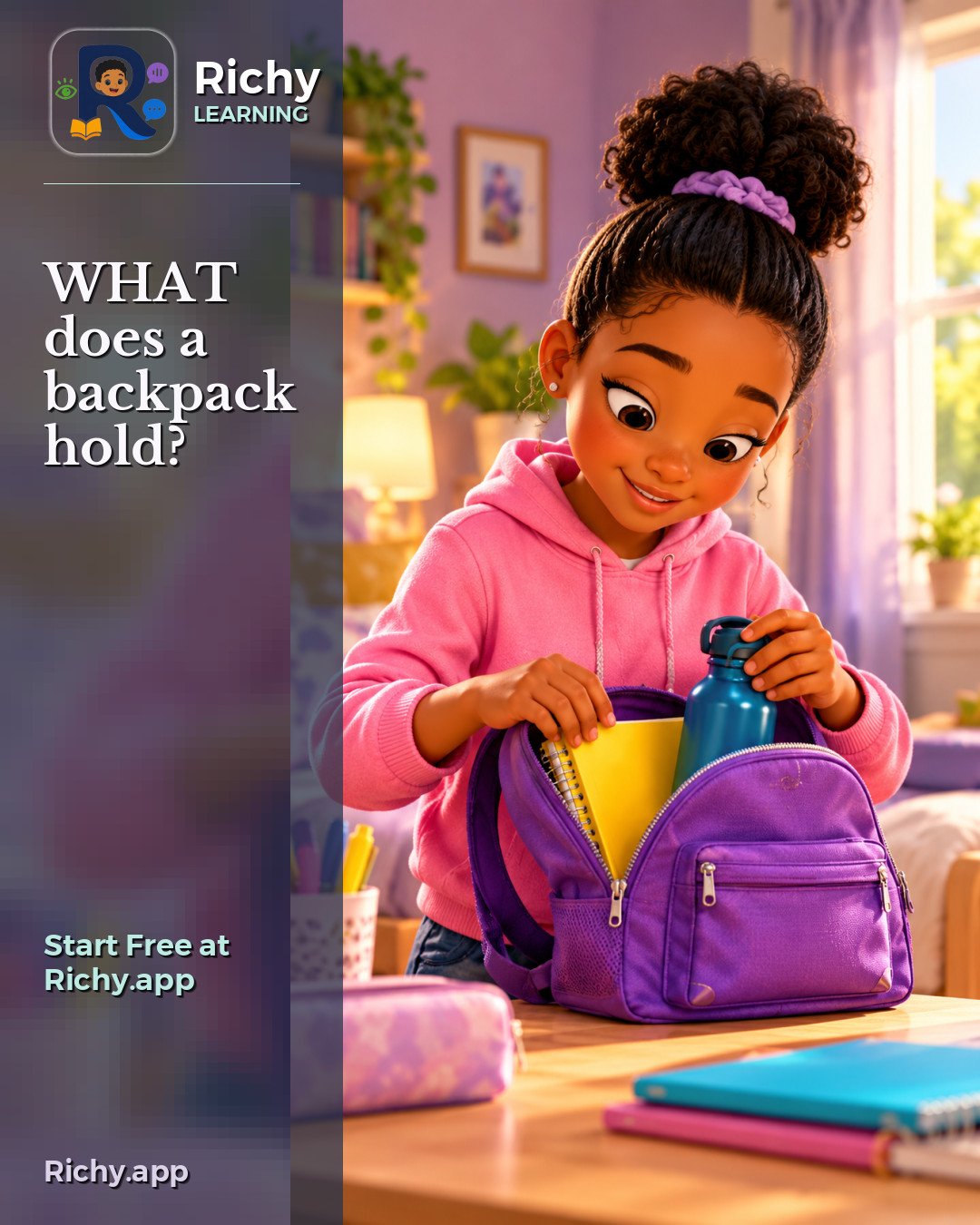
    WHAT Does a Backpack Hold?

    Seeing a child pack a backpack offers a simple way to talk about Object Functions. For example, the backpack holds items like a notebook for writing and a water bottle for drinking. Practicing these connections helps build understanding of Everyday Objects, gently supporting communication skills. Try asking, “What goes in your backpack?” and pause to wait for any response. This respectful, step-by-step approach fits all learners. Explore more communication strategies with Richy Learning. Start free at Richy.app, or find Richy on the App Store for iPhone and iPad.