Author: admin

  • Practise WHO Questions with Help

    Practise WHO Questions with Help

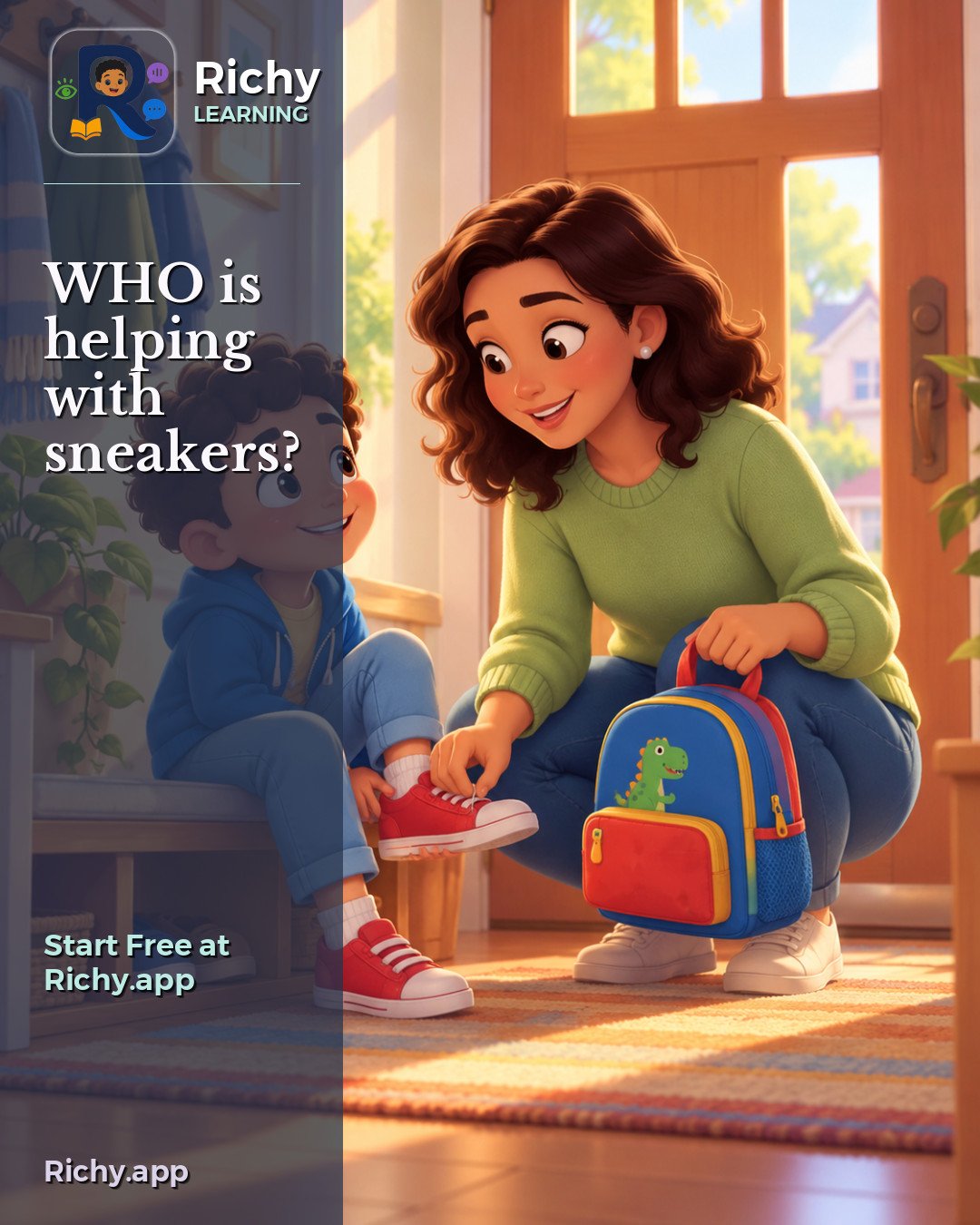
    WHO is helping with sneakers?

    When a child is getting ready, asking WHO is helping can build communication skills and awareness of daily interactions. For example, saying or pointing to the woman helping with the boy's red sneakers encourages recognizing people in familiar routines. This supports understanding WHO questions using Everyday Words in natural moments. Try gently asking "Who is helping you?" during dressing times to encourage responses by gesture or words. Start free at Richy.app, or find Richy on the App Store for iPhone and iPad.
  • Connect Everyday Words with Backpacks

    Connect Everyday Words with Backpacks

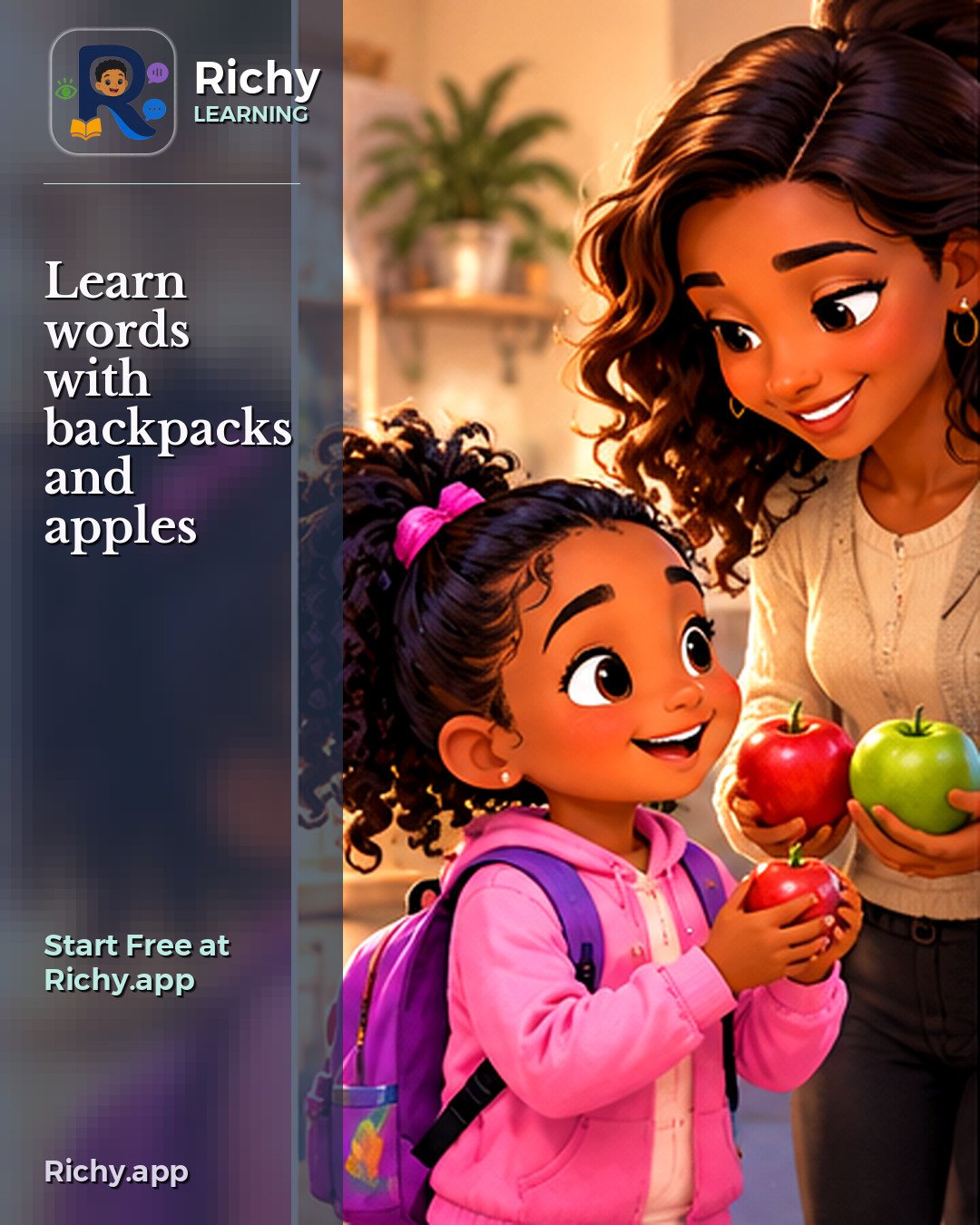
    Learn Words with Backpacks and Apples

    Using familiar objects like a backpack and apples during everyday moments helps learners connect words to real life. For example, you can name the 'backpack' while your child holds it or points to it, reinforcing the word's meaning. This approach encourages engagement and understanding in a natural setting. Try naming one Everyday Word with a photo or object each day to build confidence in communication. Start free at Richy.app, or find Richy on the App Store for iPhone and iPad.
  • Practice Communication in the Garden

    Practice Communication in the Garden

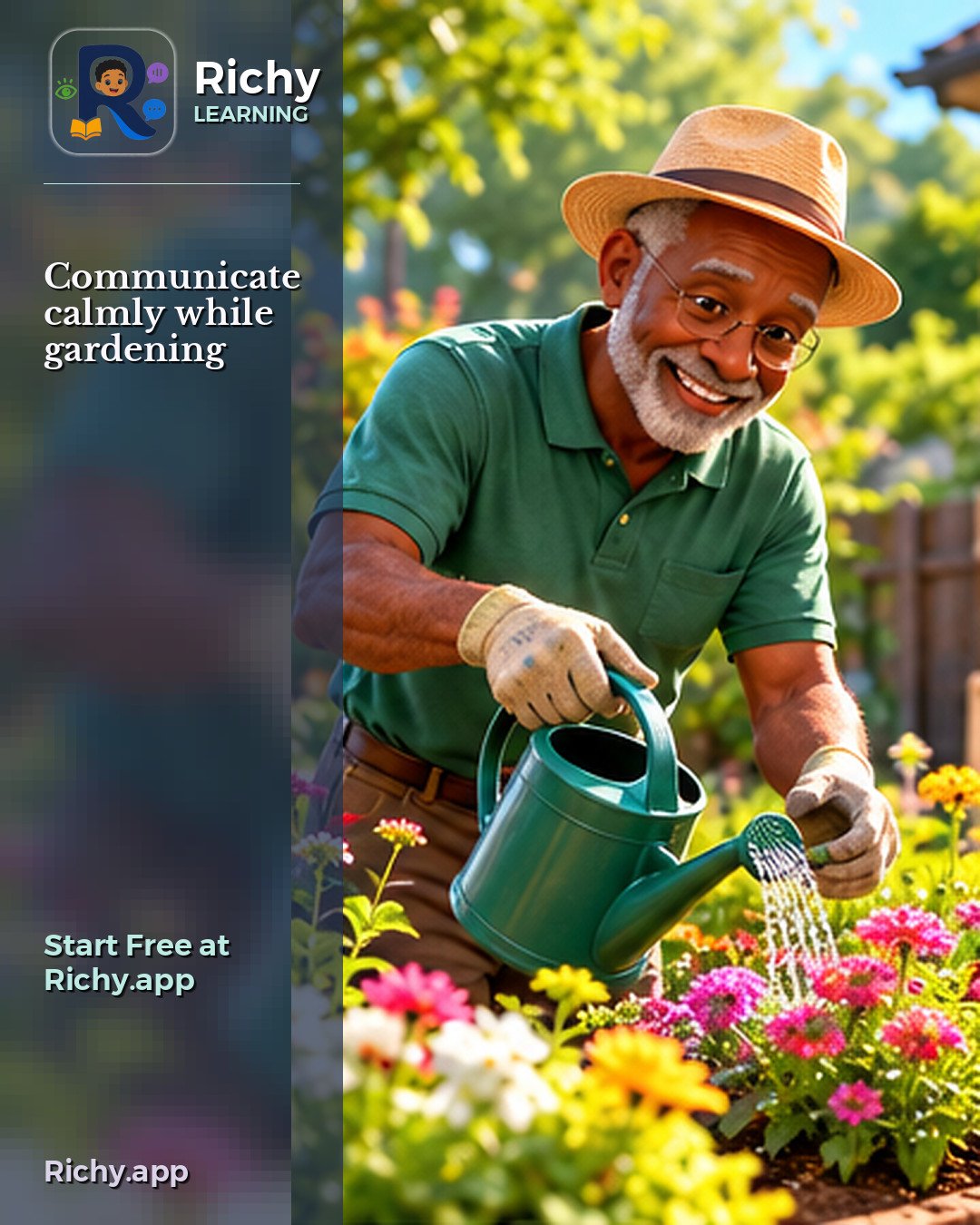
    Communicate Calmly While Gardening

    Gardening offers a peaceful way to practise communication at any age. For example, while watering flowers, you can name the plants, describe what you’re doing, or indicate choices like "more water" or "less water." This gentle pace respects the learner's comfort and encourages interaction naturally. Try this simple activity to build Everyday Words and Object Functions through real-life moments. Explore personalised practice at your own rhythm with Richy Learning. Start free at Richy.app, or find Richy on the App Store for iPhone and iPad.
  • Describe Feelings During Snack Time

    Describe Feelings During Snack Time

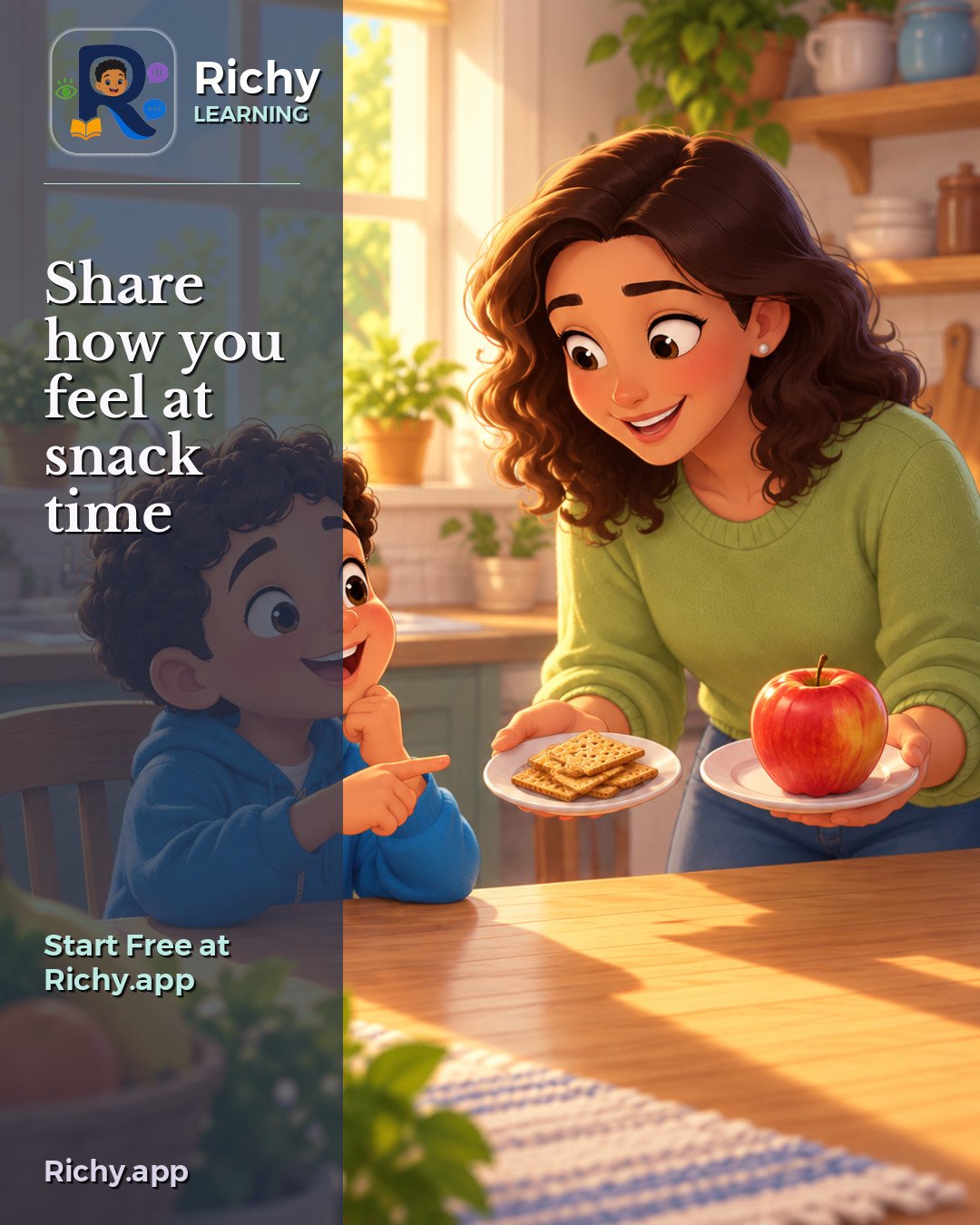
    Share How You Feel at Snack Time

    Noticing and naming feelings during everyday moments, like snack time, helps build communication skills. For example, when you see a child excited about their apple and sandwich, you might say, "You look happy! Is the snack tasty?" This models describing feelings and gently invites a response. Practicing this regularly supports understanding and expressing emotions using Everyday Words. Try describing feelings during your next snack break—it’s a simple way to connect and communicate. Start free at Richy.app, or find Richy on the App Store for iPhone and iPad.

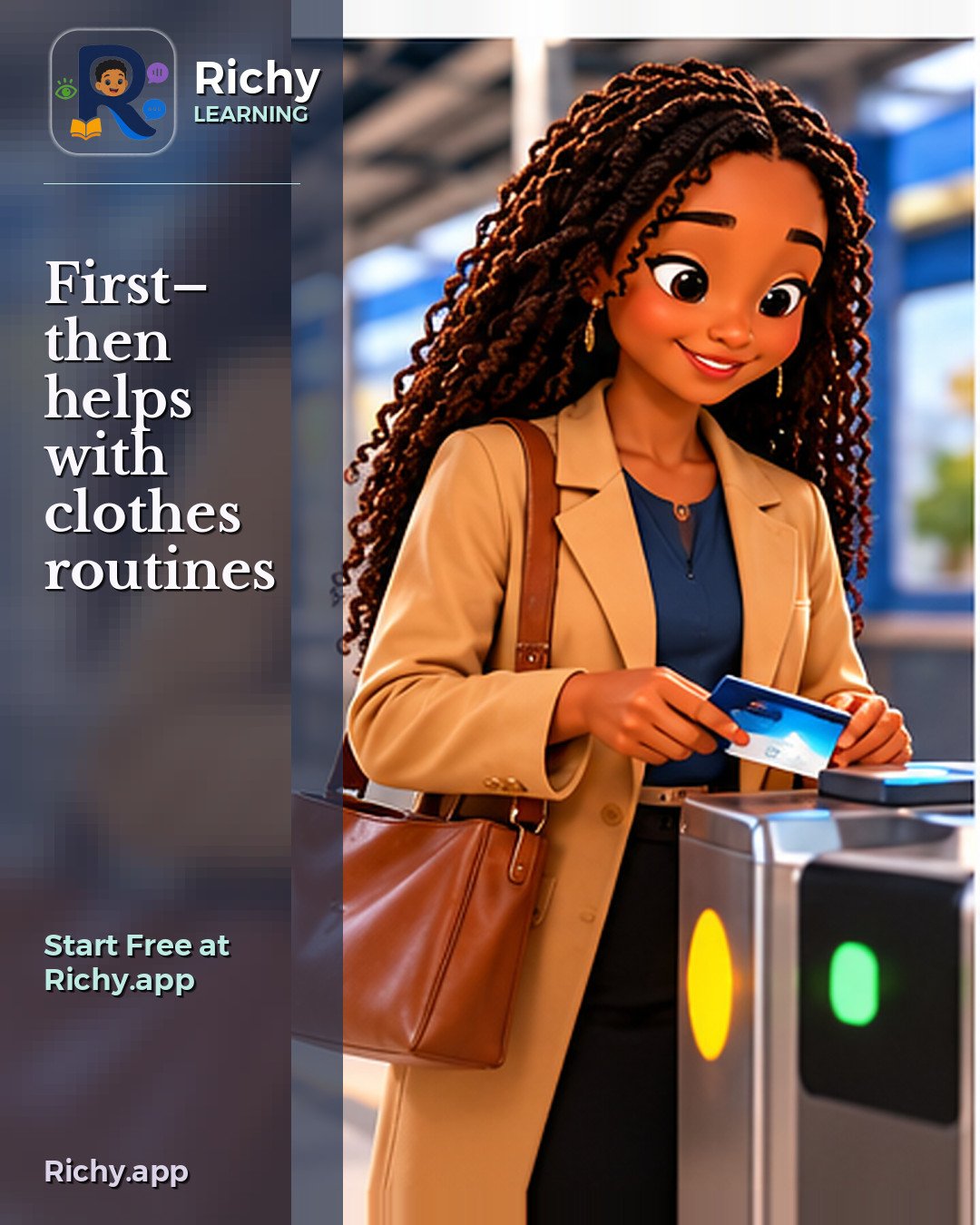
  • Use First–Then with Clothes Routines

    Use First–Then with Clothes Routines

    First–Then Helps With Clothes Routines

    Transition times like leaving home can be tricky, especially when managing clothes and belongings. Using a simple first–then approach helps create predictable steps, such as: first put on your coat, then get your bag. This clear sequence supports understanding and smooths transitions. Try this easy strategy during your next commute or daily routine. Richy Learning offers practice tools for Everyday Words and Object Functions to support communication and learning. Start free at Richy.app, or find Richy on the App Store for iPhone and iPad.
  • Give Clear Watering Instructions

    Give Clear Watering Instructions

    Water One Plant Clearly

    When guiding an older adult to water plants, one-step instructions help by focusing on a single clear request, like “Water this plant, please.” This gives time to respond without pressure and builds confidence in everyday tasks. For example, ask to water one pot at a time instead of all plants at once. Richy Learning supports practising such simple steps, helping communication stay clear and respectful. Start free at Richy.app, or find Richy on the App Store for iPhone and iPad.
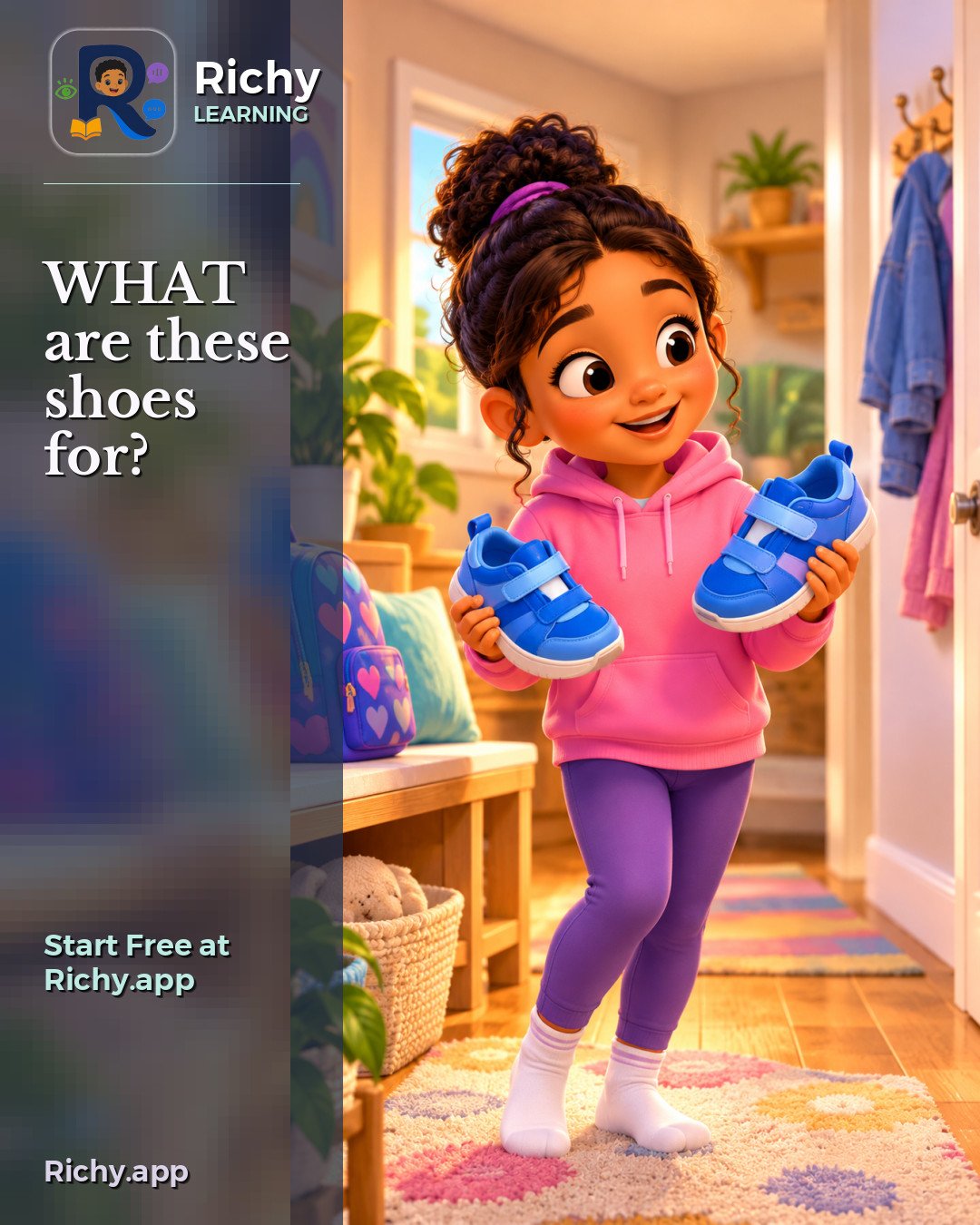
  • Explore WHAT Questions with Shoes

    Explore WHAT Questions with Shoes

    WHAT are these shoes for?

    When a child holds a familiar object like shoes, it's a great moment to practise WHAT questions together. Ask gently, "What are these shoes for?" to encourage understanding and communication about Everyday Objects. This simple practice helps build language by connecting words to real-life items and actions. You can try this at home by pointing to objects around you and exploring their use in short, respectful conversations. Richy Learning supports these skills with structured practice you can adapt at your pace. Start free at Richy.app, or find Richy on the App Store for iPhone and iPad.
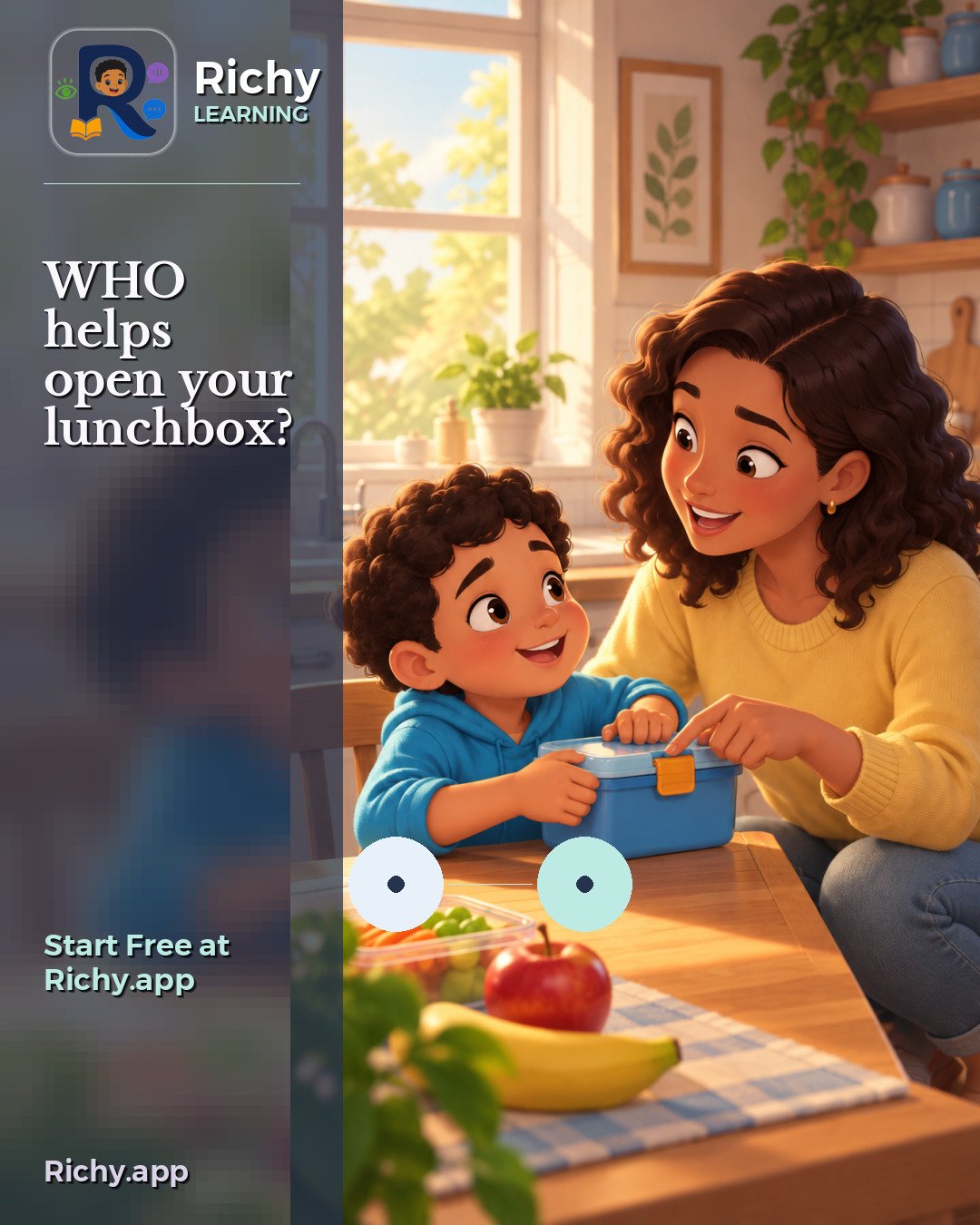
  • Recognise WHO Offers Help

    Recognise WHO Offers Help

    WHO Helps Open Your Lunchbox?

    Noticing WHO helps in everyday moments supports communication skills and builds connection. For example, watch who helps open a lunchbox during mealtime. Point to the helper and say their name or point. This simple step helps identify people and their roles in daily life. You can try this at home today with a family member. Practising WHO questions like this encourages recognition of helpers and promotes respectful communication. Richy Learning offers structured practice for WHO questions and more. Start free at Richy.app, or find Richy on the App Store for iPhone and iPad.
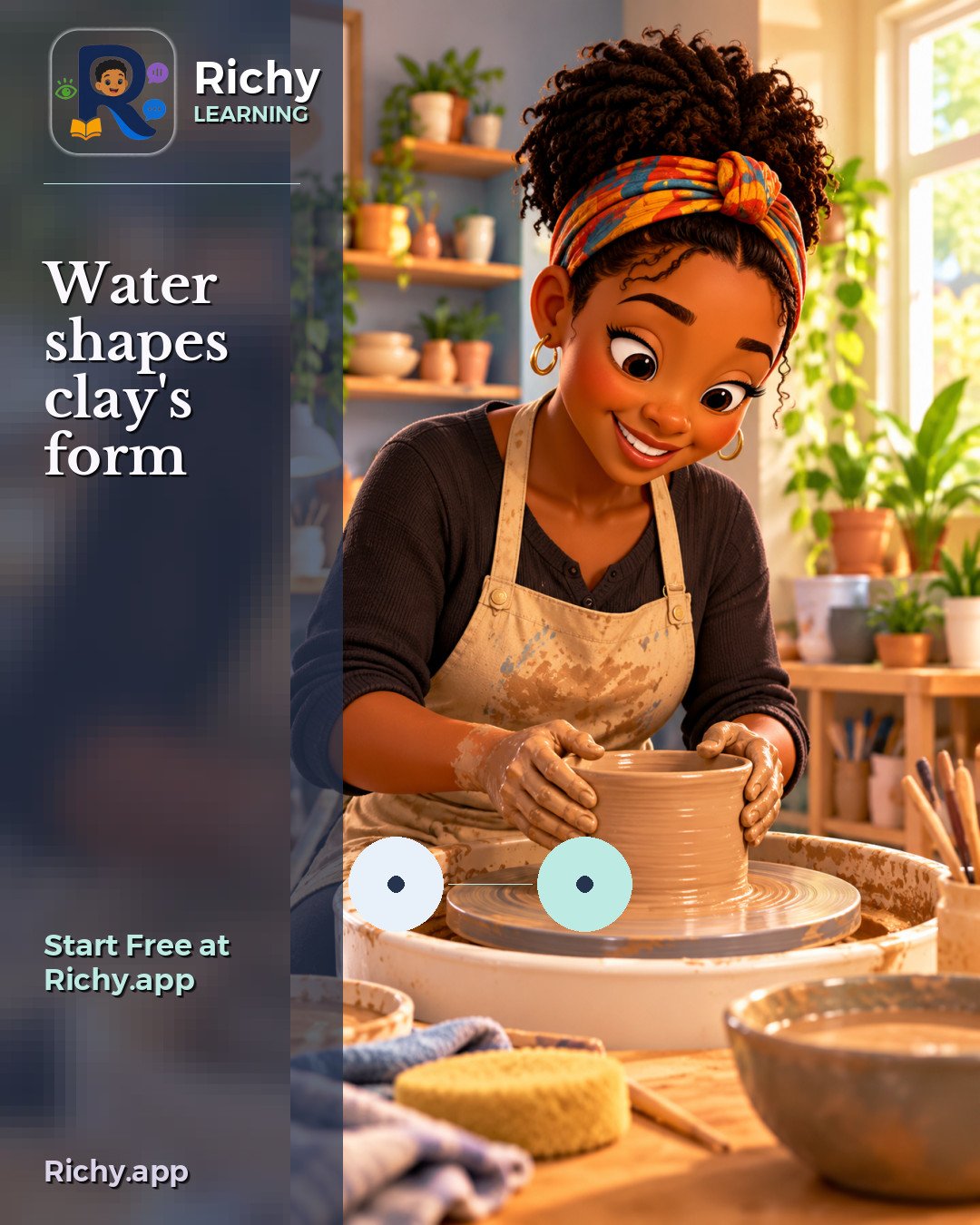
  • Understand Water’s Role in Pottery

    Understand Water’s Role in Pottery

    Water Shapes Clay's Form

    Water is essential in pottery to shape and smooth clay, helping create beautiful forms. When learning about Object Functions, pointing out how water softens and molds the clay can make the concept more concrete. Try using Richy Learning to practice talking about what everyday items like water are used for. For example, describe how water helps in shaping the clay on a pottery wheel, just like in this image. Start free at Richy.app, or find Richy on the App Store for iPhone and iPad.

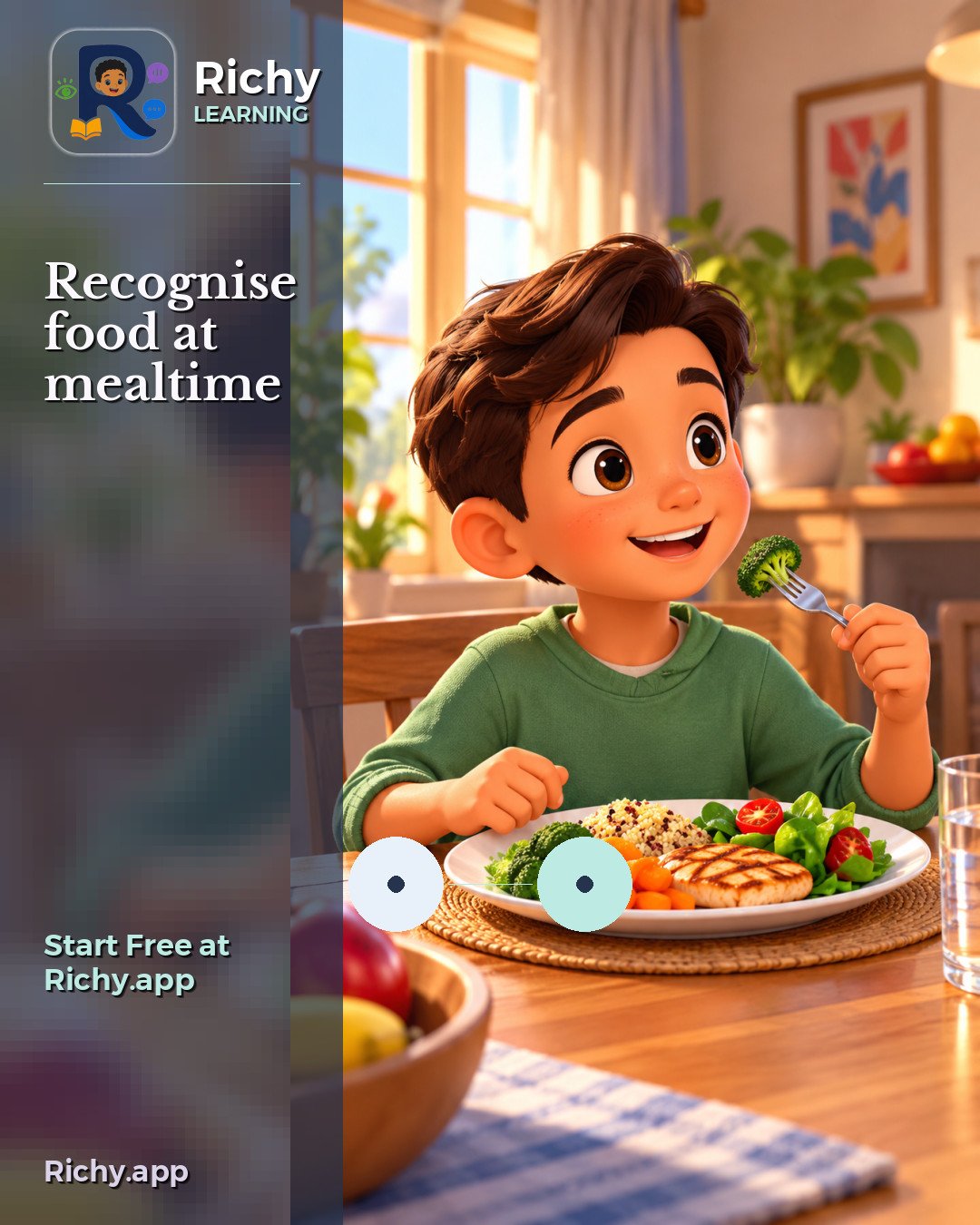
  • Recognise Food in Mealtime Moments

    Recognise Food in Mealtime Moments

    Recognise Food at Mealtime

    Helping children recognise everyday food items supports communication and understanding during mealtimes. For example, pointing to broccoli on the plate and naming it encourages connection to Everyday Objects. This simple step can build vocabulary and confidence around familiar foods. Try naming one new food item together during your next meal. Richy Learning offers structured practice to support recognising Everyday Objects like food in real life. Start free at Richy.app, or find Richy on the App Store for iPhone and iPad.