Category: ContentLase Social

Public social-first posts generated by ContentLase AI.

  • Recognise Clothes While Washing Hands

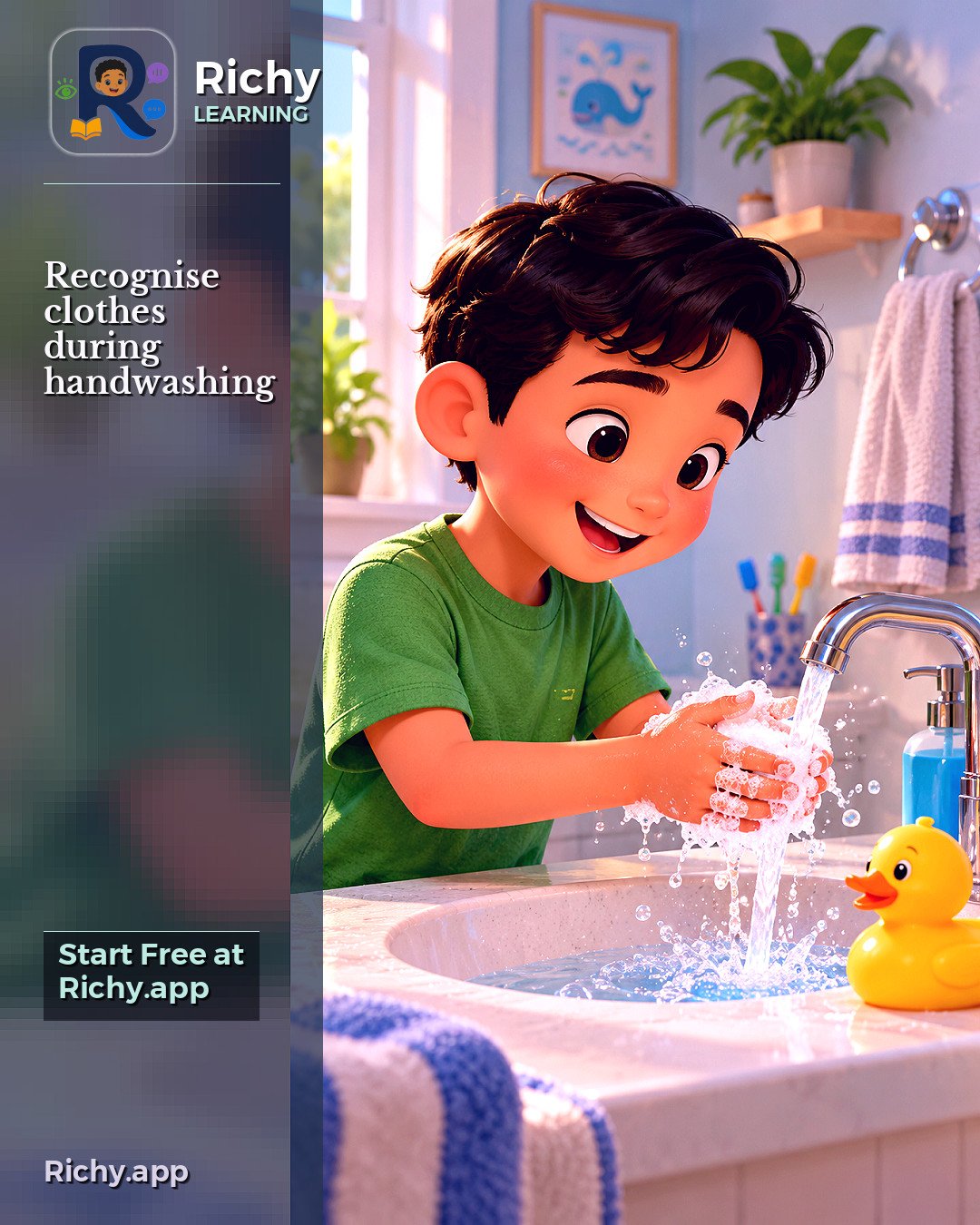
    Recognise Clothes While Washing Hands

    Recognise Clothes During Handwashing

    When children recognise Everyday Objects like clothes during daily routines, it builds meaningful language connections. For example, naming or pointing to a green shirt while washing hands helps link words with real items in context. Try asking, "What shirt are you wearing?" to encourage recognition and communication. This simple step supports learning naturally throughout the day. Richy Learning offers structured practice to explore Everyday Words and Objects in safe, familiar settings. Start free at Richy.app, or find Richy on the App Store for iPhone and iPad.
  • Connect Food Words to Cooking

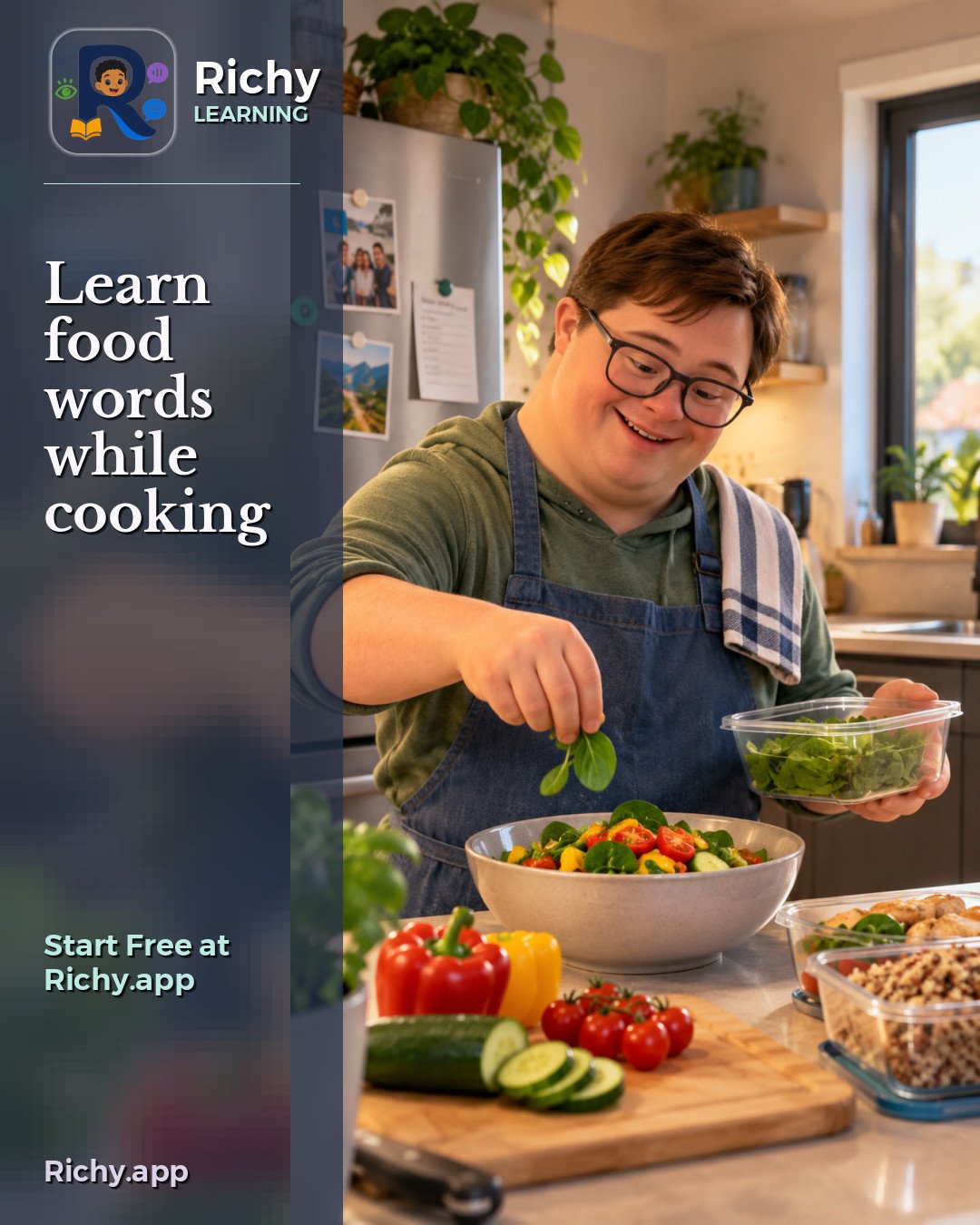
    Connect Food Words to Cooking

    Learn Food Words While Cooking

    Practising Everyday Words like “salad” or “vegetables” with real objects during cooking helps learners connect words to meaningful activities. For example, when preparing a salad, naming each vegetable out loud or pointing to it can support understanding and communication. Try this simple step: choose one food item in your kitchen and practise its name together. Richy Learning offers structured ways to support this kind of everyday word practice. Start free at Richy.app, or find Richy on the App Store for iPhone and iPad.
  • Choose Books to Practice Communication

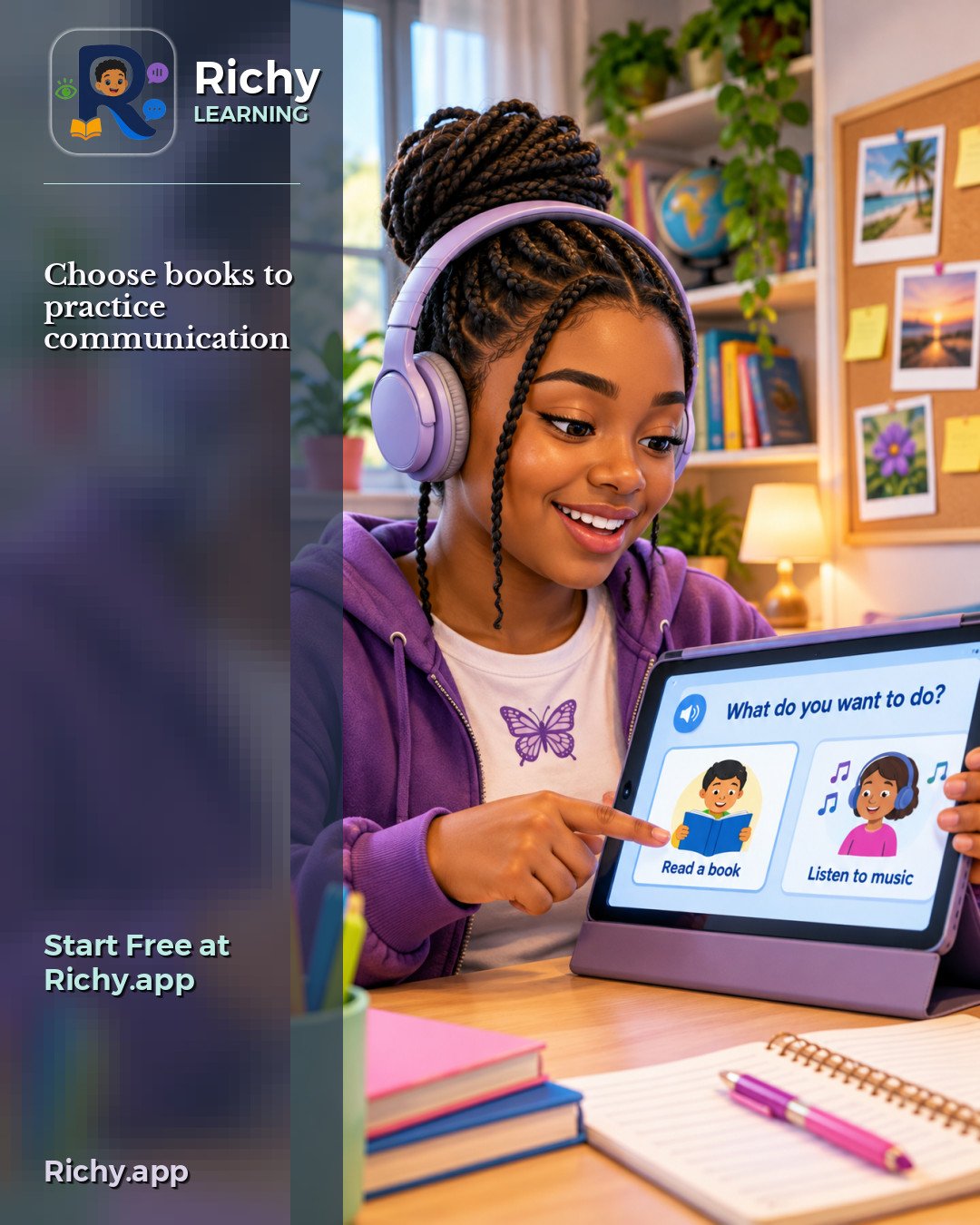
    Choose Books to Practice Communication

    Choose Books to Practice Communication

    When practising communication skills, letting the learner choose what interests them can boost confidence and engagement. For example, selecting to read a book or listen to music offers a comfortable way to use Everyday Words and Object Functions. This respectful approach supports learning across ages by honoring pace and preference. Try offering simple choices during daily activities to encourage communication and independence. Richy Learning offers structured practice to support these everyday skills. Start free at Richy.app, or find Richy on the App Store for iPhone and iPad.
  • Describe Feelings with Gentle Support

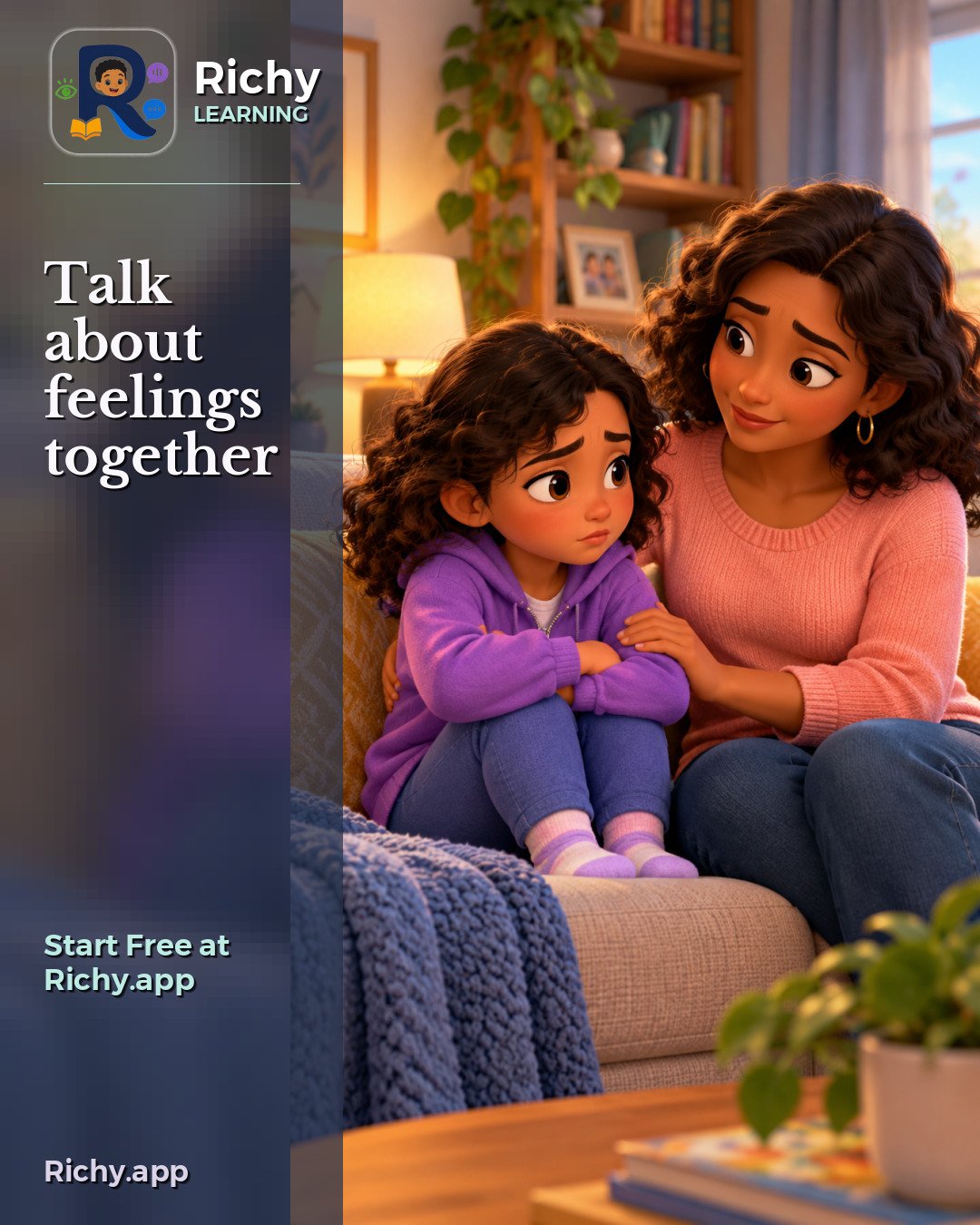
    Describe Feelings with Gentle Support

    Talk About Feelings Together

    When a child looks upset, naming feelings helps them feel understood. For example, say, “You seem sad. Do you want to tell me why?” This gives a chance to share safely and builds Everyday Words about emotions. Try this gentle question today to open calm, respectful communication. Richy Learning supports practising Everyday Words and feelings with adaptable, clear steps for all ages. Start free at Richy.app, or find Richy on the App Store for iPhone and iPad.
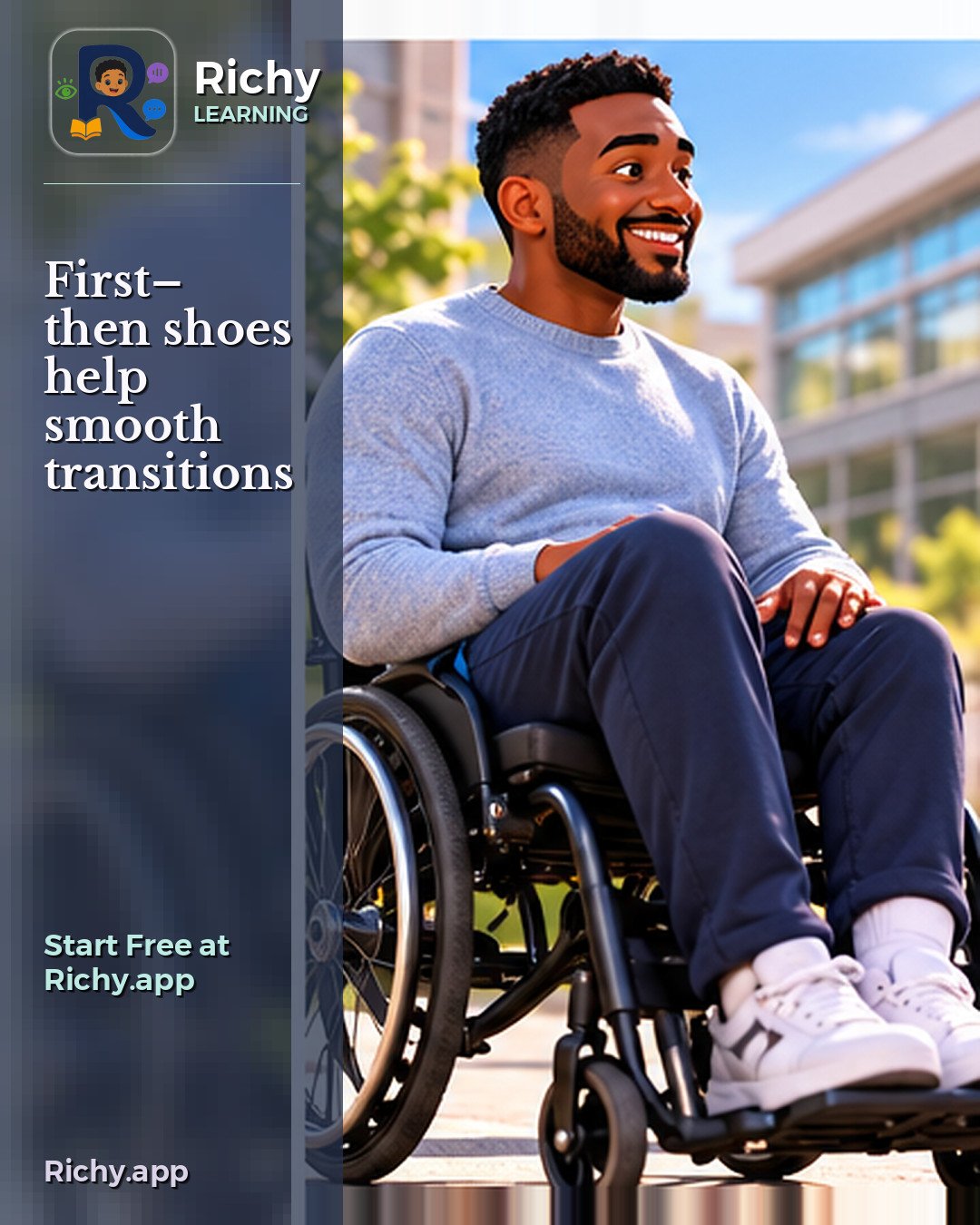
  • Use First–Then for Shoe Routines

    Use First–Then for Shoe Routines

    First–Then Shoes Help Smooth Transitions

    Transitions like putting on shoes can be smoother with a simple First–Then routine. For example, say “First shoes, then outside” with a clear gesture or picture to help signal the next step. This predictable pattern supports understanding and eases changes in activities. Try this respectful, step-by-step approach to build comfort and independence. Richy Learning encourages gentle practice of Everyday Objects like shoes through structured communication. Start free at Richy.app, or find Richy on the App Store for iPhone and iPad.
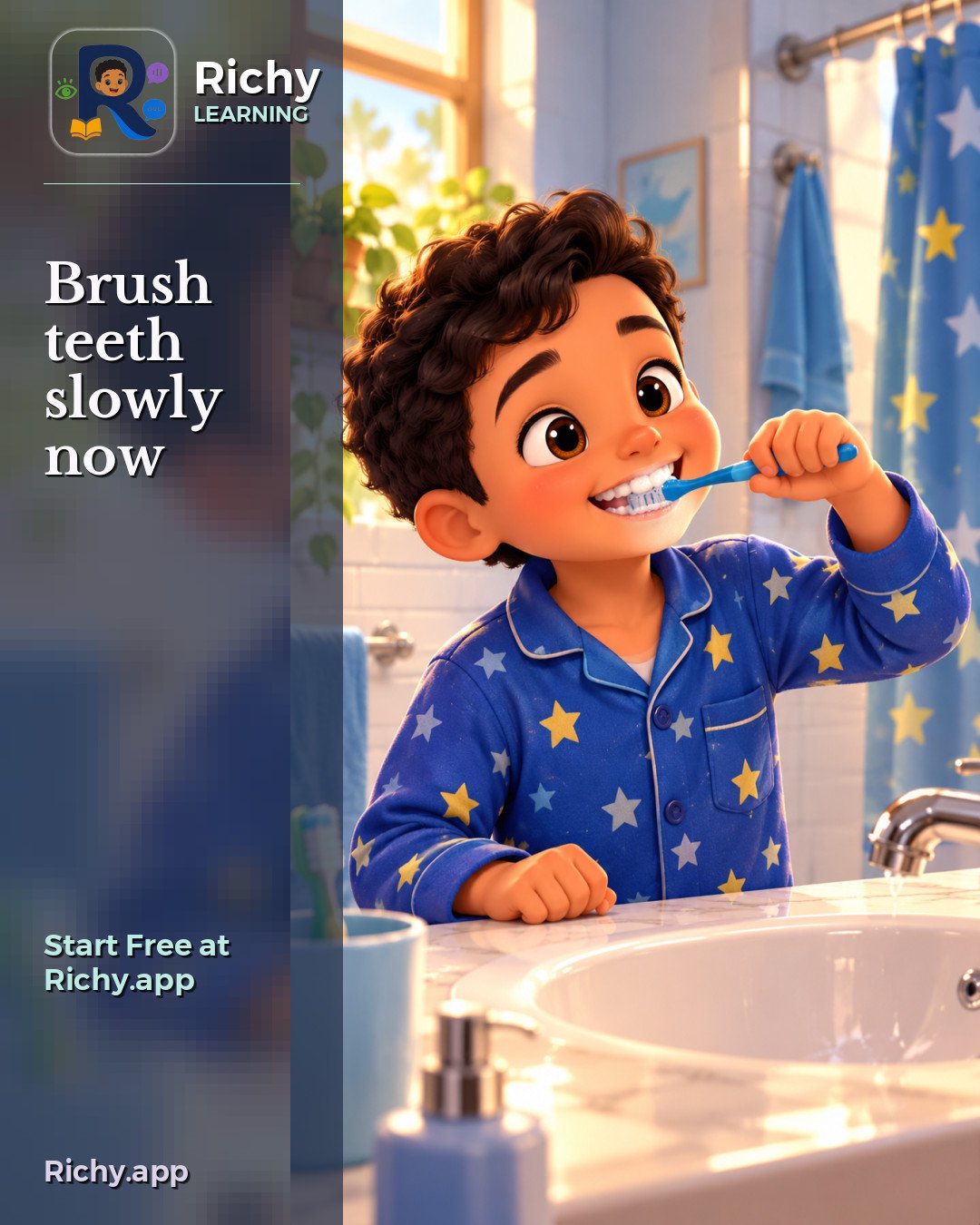
  • One-Step Toothbrushing Instructions

    One-Step Toothbrushing Instructions

    Brush teeth slowly now

    When helping children learn routines like toothbrushing, giving one clear instruction at a time helps them focus and respond at their own pace. For example, say "Brush teeth slowly now" and allow a moment to let them begin. This approach supports communication using simple Everyday Words and Object Functions. Practising this gently encourages independence without pressure. Richy Learning provides structured, adaptable ways to practice one-step instructions like this in everyday settings. Start free at Richy.app, or find Richy on the App Store for iPhone and iPad.
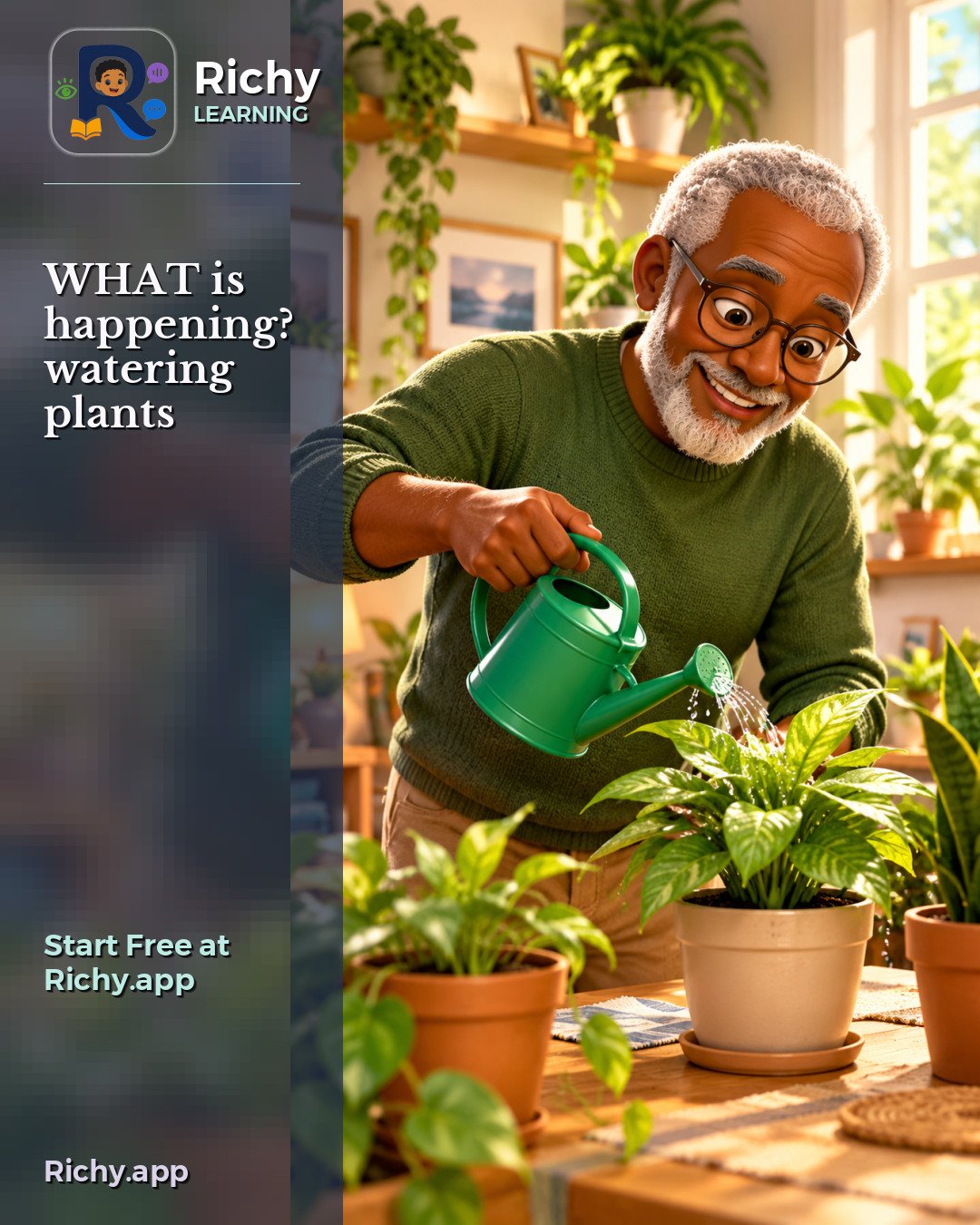
  • Explore WHAT Questions: Watering Plants

    Explore WHAT Questions: Watering Plants

    WHAT is Happening? Watering Plants

    When learning communication, practising WHAT questions helps learners explain everyday actions. For example, asking "What is happening?" while an older adult waters indoor plants encourages understanding and describing daily routines. Richy Learning supports this with structured practice using Everyday Words and Object Functions. Try asking simple WHAT questions about activities you see today to support communication growth. Start free at Richy.app, or find Richy on the App Store for iPhone and iPad.
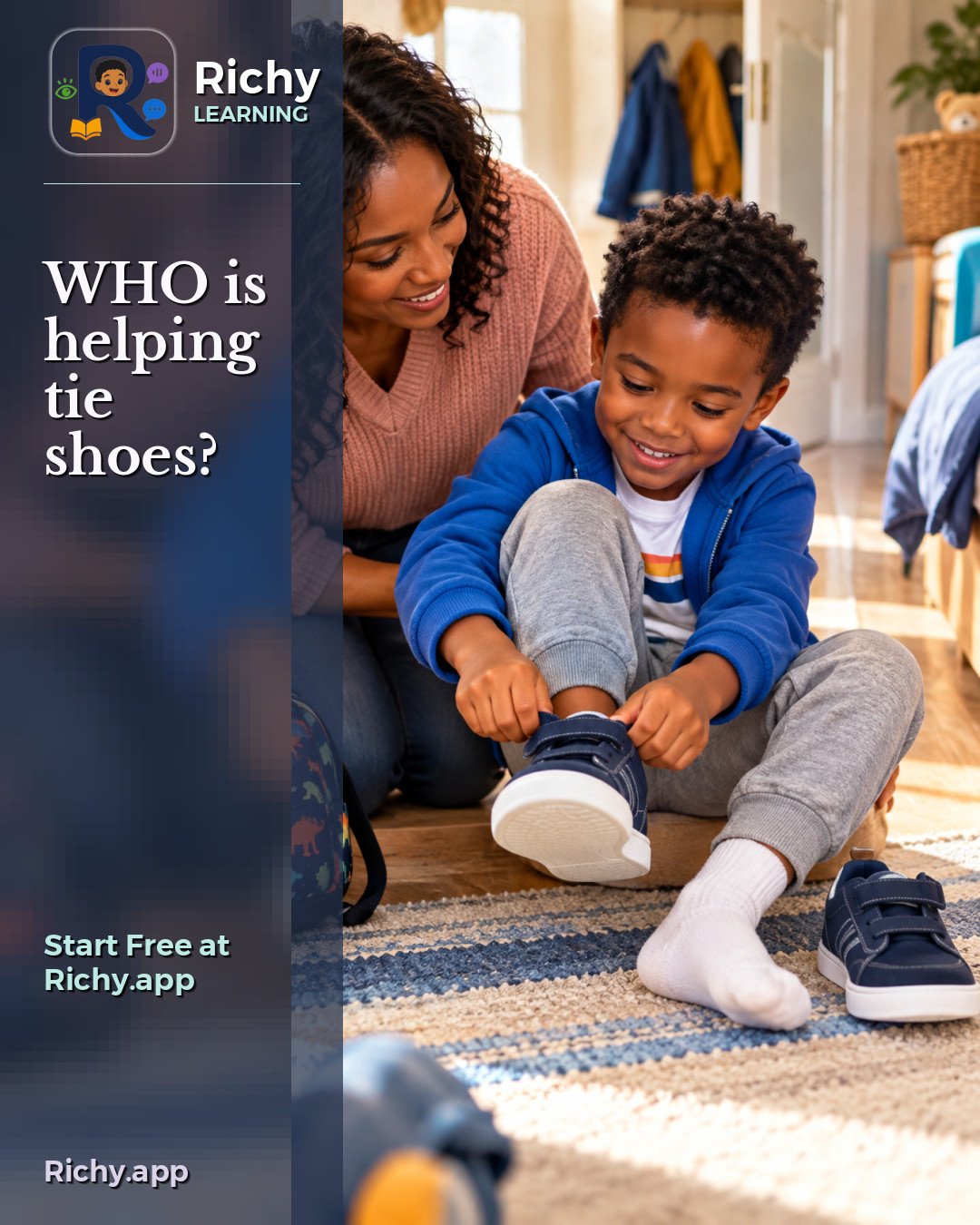
  • Ask WHO’s Helping Tie Shoes

    Ask WHO’s Helping Tie Shoes

    WHO is helping tie shoes?

    When a child learns to ask WHO is helping them, like in this moment of tying shoes, it supports meaningful communication and connection. You can gently encourage this by pointing to the helper and saying, “Who is helping you?” This simple question invites recognition of support and strengthens Everyday Words and WHO question skills. Practising in everyday situations helps build confidence for communication. Start free at Richy.app, or find Richy on the App Store for iPhone and iPad.
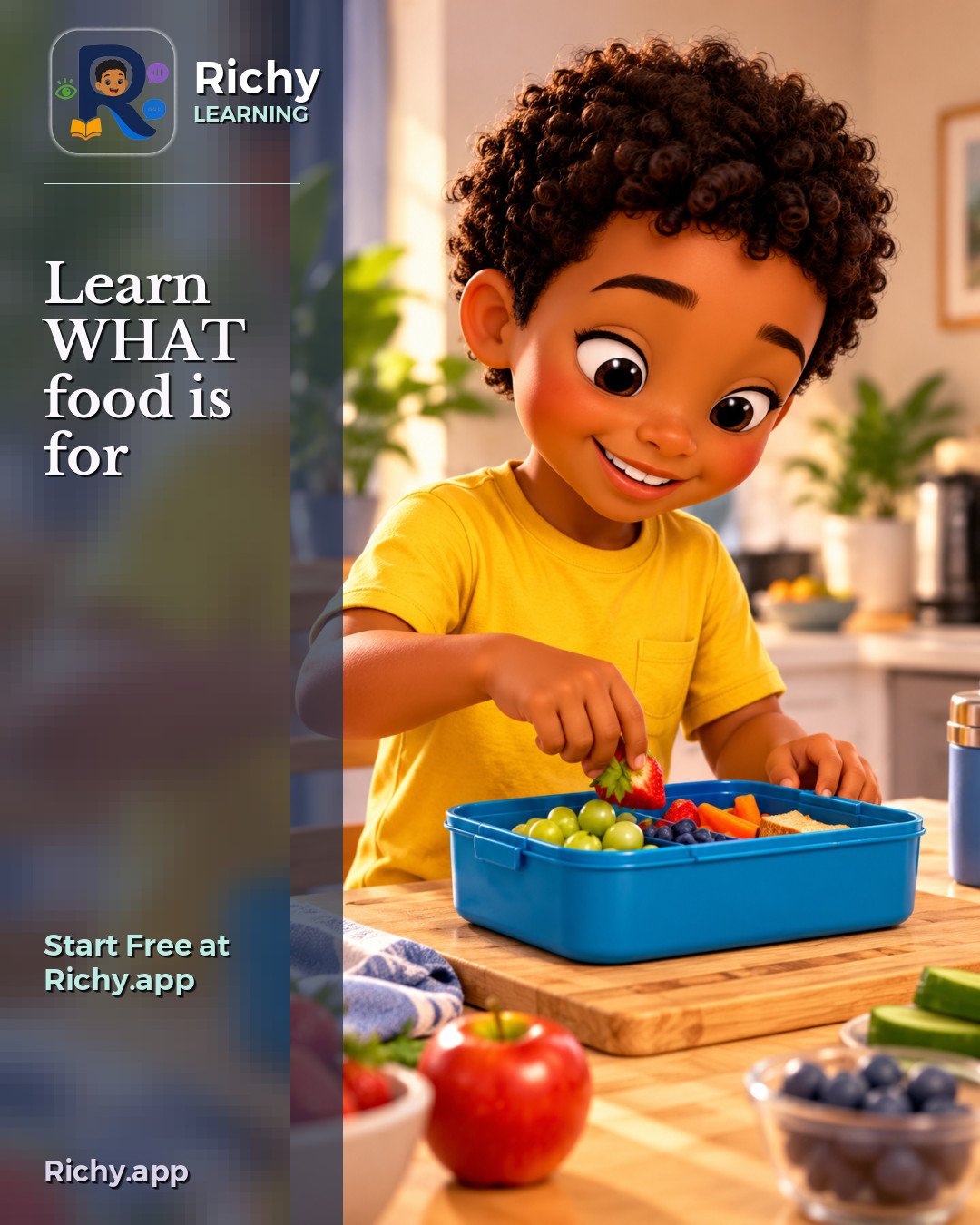
  • Explore Food Object Functions

    Explore Food Object Functions

    Learn WHAT Food Is For

    When children explore Food Object Functions, like choosing grapes and carrot sticks for a lunchbox, they build understanding of everyday items and their uses. This helps support meaningful communication and learning about the world around them. Try encouraging a child to talk about or show what each food is for during mealtime preparation. Richy Learning offers structured practice to help learners explore Everyday Objects and their functions. Start free at Richy.app, or find Richy on the App Store for iPhone and iPad.

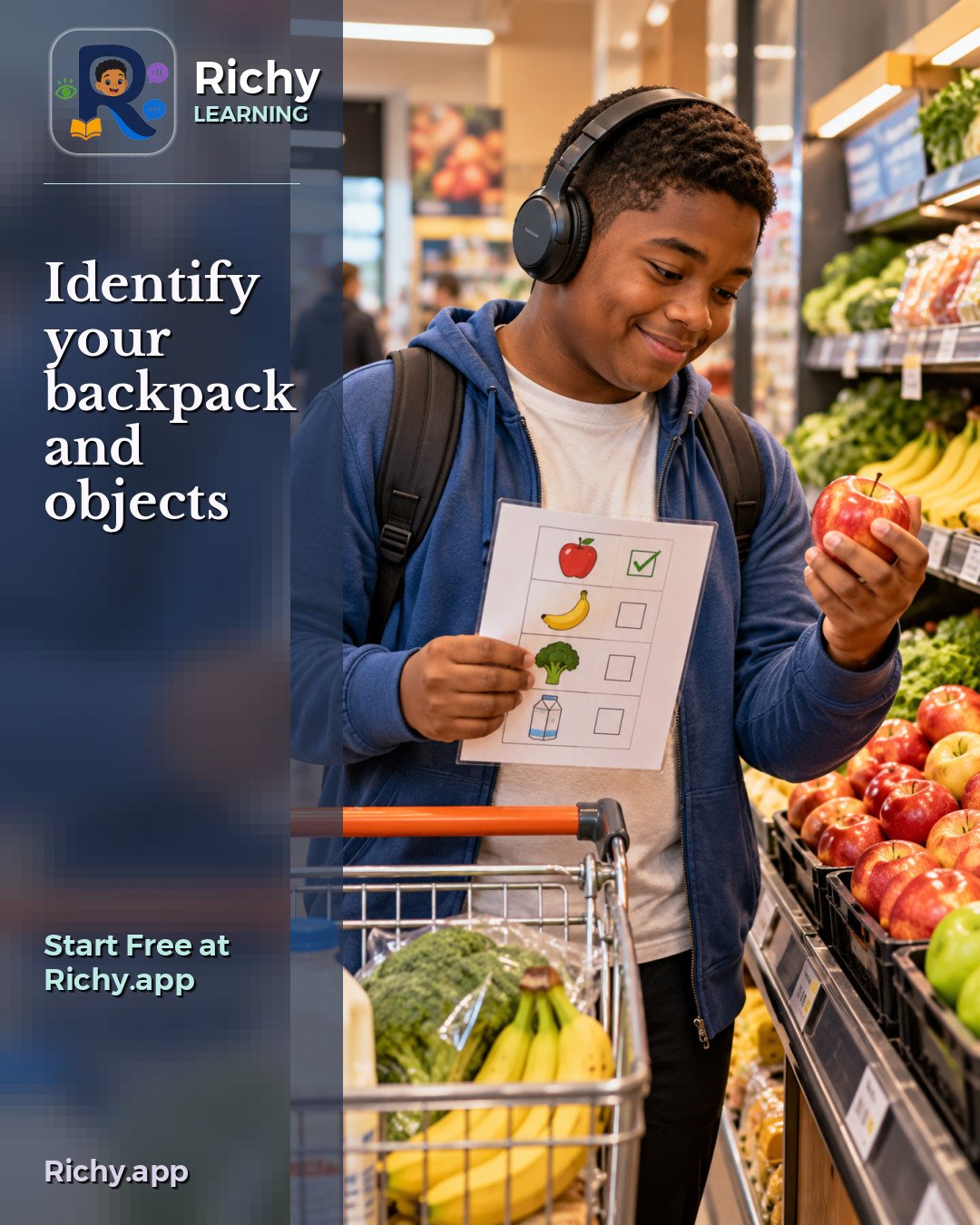
  • Recognise Backpack and Everyday Objects

    Recognise Backpack and Everyday Objects

    Identify Your Backpack and Objects

    Recognising Everyday Objects like a backpack helps build independence and communication skills. For example, a teen shopping with a checklist can connect the backpack they wear to the items they select, reinforcing real-world vocabulary. This practical approach supports meaningful learning by linking objects with daily activities. Try pointing out your backpack and naming items around you to practise Everyday Objects recognition. Start free at Richy.app, or find Richy on the App Store for iPhone and iPad.